Urgent Care
Specialty Care
Labs
Membership Plans
About Us
Support

LifeMD+

Learn why LifeMD+ can positively change your healthcare experience

Main Menu

No results found. Try a different search.

Includes medication & delivery

Prescription
mental health support on your time

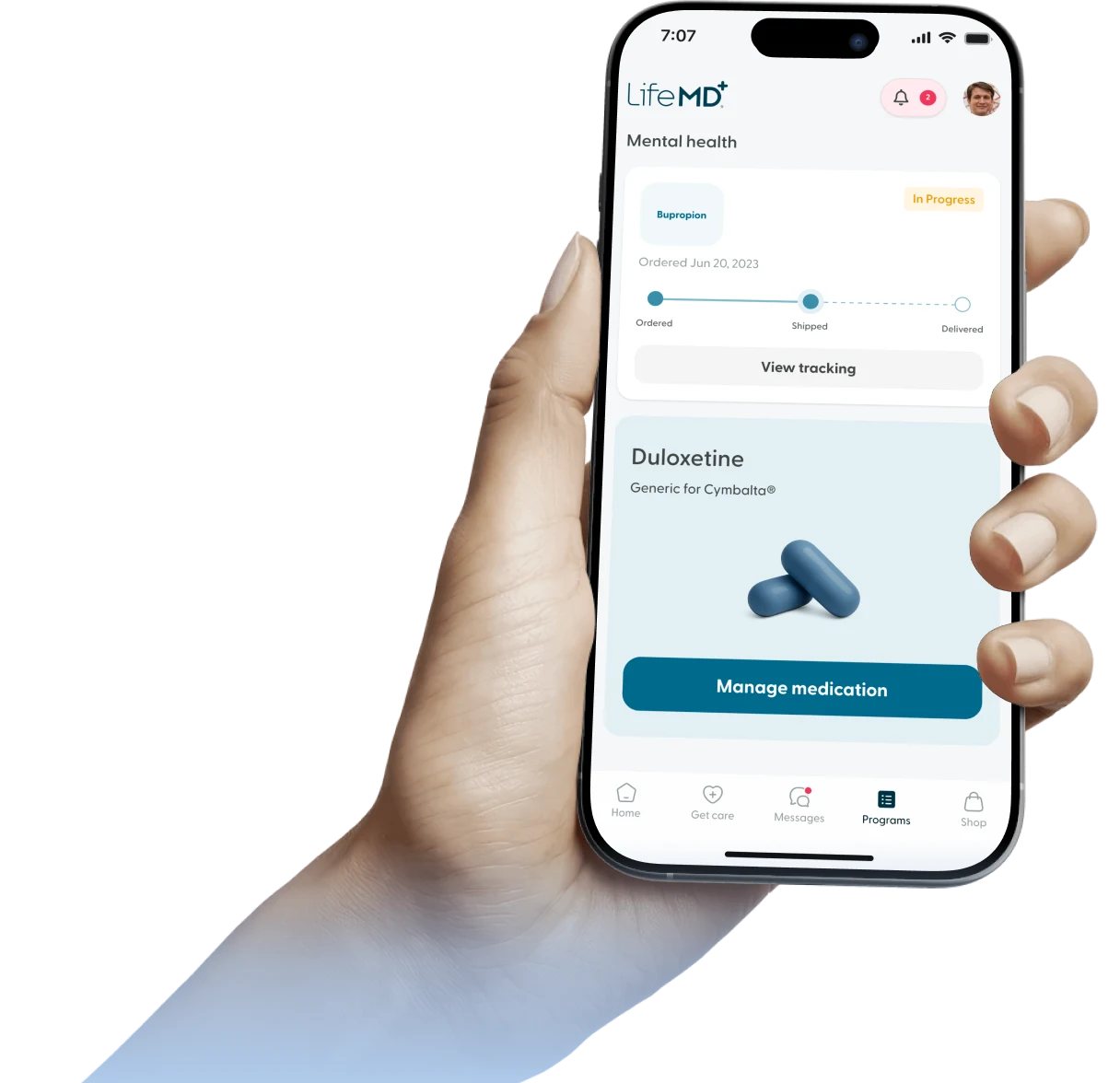
When you are struggling with your mental health, waiting weeks for treatment is not an option. LifeMD connects you with a licensed provider for a timely evaluation, medication, and expert support.

Escitalopram

Lexapro®

Delivered

Wellbutrin SR®

Bupropion SR

Delivered

Dr. Anthony Puopolo

Hi. Following up to see if you’re feeling better. You got this!

10:05 AM

4.9 Star App Store Rating
4.9 Star Google Play Store Rating
Board-Certified Providers
Available In All 50 States
745,000 Patients
100% Online Virtual Care
4.9 Star App Store Rating
4.9 Star Google Play Store Rating
Board-Certified Providers
Available In All 50 States
745,000 Patients
100% Online Virtual Care

Access affordable mental health
medications and expert care

Prescription medication can be an incredible tool when addressing mental health challenges.
Our knowledgeable healthcare providers will work with you to find a treatment
that helps you feel and function better.


Social &
Performance Anxiety

Hi provider, I feel anxious before meetings. Is this normal?

10:04 AM

Dr. Anthony Puopolo

It sounds like performance anxiety. Let’s find the right treatment for you.

10:05 AM

Designed for as-needed treatment. The plan includes an initial review of your health information and secure messaging with your provider, ongoing message-based support, and a set amount of medication each month if prescribed.

Get Started Get Started

Anxiety &
Depression

Wellbutrin SR®

Lexapro®

Prozac®

Inderal®

Celexa®

Wellbutrin SR®

Lexapro®

Prozac®

Inderal®

Celexa®

Ideal for managing ongoing anxiety or depression. This plan includes an initial video visit with a provider, the option for ongoing support through secure messaging, and includes a 30-day supply of medication if prescribed.

Get Started Get Started

We believe quality care should be accessible to everyone. The LifeMD Mental Health Program
offers options that are fast, affordable, and easy to start.

Virtual mental healthcare
when you need it


Get timely psychiatric care when you need it
Avoid inconvenient office visits and waiting rooms
Speak with U.S-licensed healthcare providers
Access affordable, science-backed medications

Get prescription medications
online through LifeMD

Manage a range of mental health conditions, including anxiety and depression — right from home.
Treatment includes medication, if prescribed, and ongoing support.


Wellbutrin SR®
Lexapro®
Prozac®
Inderal®
Buspar®
Celexa®
Cymbalta®
Effexor®
Zoloft®
150mg
Tablet
Generic available
10mg
Tablet
Generic available
10mg-20mg
Capsule
Generic available
40mg
Tablet
Generic available
15mg
Tablet
Generic available
20mg
Tablet
Generic available
30mg
Capsule
Generic available
37.5mg-75mg
Tablet
Generic available
50mg-100mg
Tablet
Generic available
Wellbutrin SR®
150mg
Tablet
Generic available
Lexapro®
10mg
Tablet
Generic available
Prozac®
10mg-20mg
Capsule
Generic available
Inderal®
40mg
Tablet
Generic available
Buspar®
15mg
Tablet
Generic available
Celexa®
20mg
Tablet
Generic available
Cymbalta®
30mg
Capsule
Generic available
Effexor®
37.5mg-75mg
Tablet
Generic available
Zoloft®
50mg-100mg
Tablet
Generic available

See Important safety information

How it Works

Begin treatment online in just 3 easy steps.

01
Start your consultation

Answer a few questions about your health history and current symptoms. It only takes a few minutes.

02
Connect with a provider

A licensed provider will carefully review your responses and, if appropriate, prescribe a personalized treatment plan.

03
Begin a treatment plan

Your provider will create a personalized plan, which may include prescription medication and ongoing support.

Get Started Today Get Started Today

Mild anxiety

What this might feel like

Feeling anxious or on edge

Thoughts that won’t stop

Worrying more than usual

Anxious in social settings

Generally feeling anxious

Anxious during meetings

Treatments for mental health

Get comprehensive mental health support when and where you need it. Whether you’re facing
anxiety, depression, or other challenges, LifeMD offers personalized care to help you feel better on
your time.


Clear pricing. Zero surprises.

Your front door to healthcare — unlimited virtual care access, exclusive
pricing, and wellness tools that fit your lifestyle.

Mental Health

Taking care of your mental health is easier and more affordable than ever. LifeMD offers video- and message-based consults, expert diagnoses, and medication, when appropriate.

Get Started Get Started
Virtual psychiatric evaluations
Diagnosis and treatment for anxiety and depression
Medication management when appropriate
Ongoing support from licensed providers

LifeMD

You now have unlimited access to your care team.

10:05 AM

How LifeMD, psychiatric care,
and medication work together

Mental health care through LifeMD is convenient and affordable — with no outside
referrals needed.

Mental Health

Mental health medication can help balance brain chemistry, manage symptoms, and support your overall well-being, making it easier to navigate daily life and emotional challenges.

Psychiatry Care

Schedule a video consultation at your convenience or get an initial response within hours if message-based care is recommended.

Prescription Medication

Prescription delivered hassle-free to your preferred address or same-day pickup at a local pharmacy.

Frequently Asked Questions

What is the LifeMD Mental Health Program?

The LifeMD Mental Health Program provides virtual, medication-based support for anxiety and depression. Care is personalized and accessible from home.

What conditions does the program treat?

LifeMD treats performance anxiety, social anxiety, generalized anxiety disorder, and depression through provider-guided medication management.

What's included in the LifeMD Mental Health Program?

The program includes provider consultations, personalized treatment, secure messaging, prescription management, and the cost of medication when prescribed.

How is my treatment plan personalized?

Every treatment plan is designed based on your symptoms, history, goals, and preferences.

What medications may be prescribed?

Depending on your condition and care plan, your provider may prescribe medications like SSRIs, SNRIs, and NDRIs. In addition, where appropriate, medications such as beta blockers may be prescribed "off-label" for certain mental health conditions.

Do I need a video visit to receive treatment?

Some patients begin with a video consult, while others may qualify for message-based care depending on their condition and medical history.

What happens after I start treatment?

After starting treatment, you'll check in regularly so your provider can review your progress and make adjustments if needed.

Who will manage my care at LifeMD?

You'll work with a licensed medical provider who will design and adjust your treatment plan based on your symptoms and goals.

How often will my plan be reviewed?

Treatment plans are reviewed monthly through brief renewal check-ins to monitor symptoms, side effects, and treatment effectiveness.

Will I be able to message my provider?

Yes. You'll have secure messaging access to your provider so you can ask questions or share updates at any time.

What if I have questions between appointments?

You can securely message your provider anytime through the patient portal with questions or concerns.

How do refills work?

Your provider will send refill reminders and request check-ins to assess your response before renewing medications each month.

Will my dosage change over time?

It depends. Your provider may adjust your dosage based on monthly check-ins and symptom tracking.

Is everything handled online?

Yes. All care, from consultations to prescription delivery, is handled online for convenience, privacy, and flexibility.

Clinically proven psychiatry treatments

LifeMD offers comprehensive, personalized care through psychiatry services and medication. Our secure virtual platform makes accessing quality mental health care “no big deal”.

Get Started Today Get Started Today

Important Notice: Talk to your psychiatrist or healthcare professional about the possible risks and benefits associated with the above medications before starting treatment. LifeMD does not offer therapy or counseling services and is not equipped to respond to mental health emergencies. If you’re experiencing a crisis, please call 911 or visit the nearest emergency room. IF YOU ARE CONTEMPLATING SUICIDE, CONTACT 911 OR CALL/TEXT THE NATIONAL SUICIDE PREVENTION LINE AT 988. These services are available 24/7.

Propranolol

Next refill: May 21

Prescribed

Wellbutrin SR®

Next refill: May 21

Prescribed

Zoloft®

Next refill: May 21

Prescribed

Important Safety Information

Last Updated: June 28, 2025

Table of Contents

  1. Ramelteon
  2. Trazodone
  3. Doxepin


Call your doctor if your insomnia worsens or is not better within 7 to 10 days. This may mean that there is another condition causing your sleep problem.

Be sure that you are able to devote 7 to 8 hours to sleep before being active again. Never take this medicine during your normal waking hours, unless you have at least 7 to 8 hours to dedicate to sleeping.

Ramelteon should be taken within 30 minutes of bedtime. Do not take with alcohol or with other medicines that can make you sleepy. You should not drive or operate machinery at night after taking Ramelteon. Until you know how you will react to Ramelteon, you should be careful in performing such activities during the day following taking Ramelteon. Before you take Ramelteon, tell your doctor if you have a history of depression, mental illness or suicidal thoughts. You should call your doctor right away if after taking Ramelteon you walk, drive, eat or engage in other activities while asleep. Drowsiness is the most common adverse event observed in clinical trials. For more information, please see the complete Prescribing Information, including the Medication Guide.

What should I tell my healthcare provider before taking Ramelteon?

Before you take Ramelteon, tell your healthcare provider if you:

  • Have a history of depression, mental illness, or suicidal thoughts
  • Have severe sleep apnea
  • Have kidney or liver problems
  • Have a history of drug or alcohol abuse or addiction
  • Have a history of glaucoma or urinary retention
  • Have any other medical conditions

Tell your doctor about all of the medicines you take including prescription and nonprescription medicines, vitamins and herbal supplements.

Ramelteon and other medicines may affect each other causing side effects. Ramelteon may affect the way other medicines work, and other medicines may affects how Ramelteon works. Especially tell your healthcare provider if you take: Luvox (fluvoxamine).

Who should not take Ramelteon?

You should not use Ramelteon if you are allergic to it, or if:

  • You have severe liver disease; or
  • You also take fluvoxamine.

Ask your doctor or pharmacist if you are not sure if your medicine is one that is listed above.

Know the medicines you take. Keep a list of your medicines with you to show your doctor and pharmacist each time you get a new medicine.

Medicines are sometimes prescribed for purposes other than those listed in a Medication Guide.

Do not use Ramelteon for a condition for which it was not prescribed. Do not share Ramelteon with other people, even if you think they have the same symptoms that you have. It may harm them.

INDICATIONS

Ramelteon is a sedative, also called a hypnotic. It works by affecting certain substances in your body that help regulate your "sleep-wake cycle."

Ramelteon is used to treat insomnia that is associated with having trouble falling asleep.

Dosing In Adults

The recommended dose of Ramelteon is 8 mg taken within 30 minutes of going to bed. It is recommended that Ramelteon not be taken with or immediately after a high-fat meal. The total Ramelteon dose should not exceed 8 mg per day.

Dosing In The Elderly

The recommended starting dose of Ramelteon in elderly patients (≥ 65 years old) is 8 mg once daily.

Administration

Ramelteon should be taken within 30 minutes of bedtime.

To minimize the potential for next day effects, Ramelteon should not be taken within 3 hours of a meal.

The total Ramelteon dose should not exceed 8 mg per day.

How should I take Ramelteon?

  • Take Ramelteon exactly as your healthcare provider tells you to take it.
  • Your healthcare provider will tell you how much Ramelteon to take and when to take them.
  • Your healthcare provider may change your dose if needed.
  • Take Ramelteon within 30 minutes of bedtime. After taking Ramelteon, you should confine your activities to those necessary to prepare for bed.
  • Do not take Ramelteon within 3 hours of a meal. Ramelteon may not work as well, or may make you sleepy the next day if taken with or right after a meal.
  • Do not take Ramelteon unless you are able to get a full night of sleep before you must be active again.

Call your healthcare provider if your sleep problems get worse or do not get better within 7 to 10 days. This may mean that there is another condition causing your sleep problem.

If you take too much Ramelteon, call your doctor or get medical help right away.

What should I avoid while taking Ramelteon?

You should not drink alcohol while taking Ramelteon. Alcohol can increase your chances of getting serious side effects with Ramelteon. You should not drive, operate heavy machinery, or do other dangerous activities after Ramelteon. You may still feel drowsy the next day after taking Ramelteon. Do not drive or do other dangerous activities after taking Ramelteon until you feel fully awake.

What is the most important information I should know about Ramelteon?

The most common side effect of Ramelteon is drowsiness or tiredness.

Tell your healthcare provider if you have any side effect that bothers you or that does not go away.

These are not all the possible side effects of Ramelteon. For more information ask your healthcare provider or pharmacist. Call your doctor for medical advice about side effects. You may report side effects to the FDA at 1-800-FDA-1088.

How should I store Ramelteon?

Store Ramelteon between 68° and 77°F (20° to 25°C).

Keep Ramelteon in a tightly closed container, and away from light. Safely throw away medicine that is out of date or no longer needed.

Keep Ramelteon and all medicines out of the reach of children.

You are encouraged to report negative side effects of prescription drugs to the FDA. Visit www.fda.gov/medwatch or call 1-800-FDA-1088.


Read the Medication Guide that comes with trazodone hydrochloride tablets before you start taking it and each time you get a refill. There may be new information. This information does not take the place of talking to your healthcare provider about your medical condition or treatment. Talk to your healthcare provider or pharmacist if there is something you do not understand or you want to learn about trazodone hydrochloride tablets.

What is the most important information I should know about trazodone hydrochloride tablets?

Antidepressant medicines, depression or other serious mental illnesses, and suicidal thoughts or actions: Talk to your healthcare provider about:

  • All risks and benefits of treatment with antidepressant medicines
  • All treatment choices for depression or other serious mental illnesses

1. Antidepressant medicines may increase suicidal thoughts or actions in some children, teenagers, and young adults within the first few months of treatment.

2. Depression and other serious mental illnesses are the most important causes of suicidal thoughts and actions. Some people may have a higher risk of having suicidal thoughts or actions. These include people who have or have a family history of bipolar illness (also called manic- depressive illness) or suicidal thoughts or actions.

3. How can I watch for and try to prevent suicidal thoughts and actions?

  • Pay close attention to any changes, especially sudden changes in mood, behaviors, thoughts, or feelings. This is very important when an antidepressant medicine is started or when the dose is changed. Call your healthcare provider right away to report new or sudden changes in mood, behavior, thoughts or feelings. Keep all follow-up visits with your healthcare provider as scheduled. Call your healthcare provider between visits as needed, especially if you are worried about symptoms.
  • Call a healthcare provider right away if you have any of the following symptoms, especially if they are new, worse, or worry you:
    • Thoughts about suicide or dying
    • Attempts to commit suicide
    • New or worse depression
    • New or worse anxiety
    • Feeling very agitated or restless
    • Panic attacks
    • Trouble sleeping (insomnia)
    • New or worse irritability
    • Acting aggressive, being angry or violent
    • Acting on dangerous impulses
    • An extreme increase in activity and talking (mania)
    • Other unusual changes in behavior or mood

4. Visual problems:eye pain changes in vision swelling or redness in or around the eye

  • eye pain
  • changes in vision
  • swelling or redness in or around the eye

Only some people are at risk for these problems. You may want to undergo an eye examination to see if you are at risk and receive preventative treatment if you are.

5. What else do I need to know about antidepressant medicines?

Never stop an antidepressant medicine without first talking to a healthcare provider.

Stopping an antidepressant medicine suddenly can cause other symptoms.

Antidepressants are medicines used to treat depression and other illnesses. It is important to discuss all the risks of treating depression and also the risks of not treating it. You should discuss all treatment choices with your healthcare provider, not just the use of antidepressants.

Antidepressant medicines have other side effects. Talk to your healthcare provider about the side effects of your medicines.

Antidepressant medicines can interact with other medicines. Know all of the medicines that you take. Keep a list of all medicines to show your healthcare provider. Do not start new medicines without first checking with your healthcare provider.

Trazodone hydrochloride tablets are not approved for use in children. Talk to your healthcare provider for more information

What are trazodone hydrochloride tablets?

Trazodone hydrochloride tablets are a prescription medicine used to treat major depressive disorder in adults.

What should I tell my healthcare provider before taking trazodone hydrochloride tablets?

Before you take trazodone hydrochloride tablets tell your healthcare provider if you:

  • have heart problems, including QT prolongation or a family history of it
  • have ever had a heart attack
  • have bipolar disorder
  • have liver or kidney problems
  • have other serious medical conditions
  • are pregnant or plan to become pregnant. Trazodone hydrochloride tablets may harm your unborn baby. Talk to your healthcare provider if you are pregnant or plan to become pregnant.
  • are breastfeeding or plan to breastfeed. It is not known if trazodone hydrochloride tablets into your breast milk. You and your healthcare provider should decide if you will take trazodone hydrochloride or breastfeed.
  • have taken a Monoamine Oxidase Inhibitor (MAOI) or if you have stopped taking an MAOI in the last 2 weeks.

Tell your healthcare provider about all the medicines you take, including prescription and non-prescription medicines, vitamins, and herbal supplements.

Using trazodone hydrochloride tablets with certain other medicines can affect each other causing serious side effects.

Know the medicines you take. Keep a list of them and show it to your healthcare provider and pharmacist when you get a new medicine.

How should I take trazodone hydrochloride tablets?

  • Take trazodone hydrochloride tablets exactly as your healthcare provider tells you.
  • If you feel drowsy after taking trazodone hydrochloride tablets, talk to your healthcare provider. Your healthcare provider may change your dose or the time of day you take your trazodone hydrochloride tablets.
  • Do not stop taking trazodone hydrochloride tablets without talking to your healthcare provider.
  • Trazodone hydrochloride tablets should be swallowed whole or broken in half along the score line. Do not chew or crush trazodone hydrochloride tablets. Tell your healthcare provider if you cannot swallow trazodone either whole or as a half tablet. If you take too much trazodone hydrochloride, call your doctor or go to the nearest emergency room right away.

What should I avoid while taking trazodone hydrochloride tablets?

  • Do not drive, operate heavy machinery, or do other dangerous activities until you know how trazodone hydrochloride tablets affect you. Trazodone hydrochloride tablets can slow your thinking and motor skills.
  • Do not drink alcohol or take other medicines that make you sleepy or dizzy while taking trazodone hydrochloride tablets until you talk with your healthcare provider. Trazodone hydrochloride tablets may make your sleepiness or dizziness worse if you take it with alcohol or other medicines that cause sleepiness or dizziness.

What are the possible side effects of trazodone hydrochloride tablets?

Trazodone hydrochloride tablets can cause serious side effects or death. See “What is the most important information I should know about trazodone hydrochloride tablets?”

Serious side effects include:

  • Serotonin syndrome. Symptoms of serotonin syndrome include: agitation, hallucinations, problems with coordination, fast heartbeat, tight muscles, trouble walking, nausea, vomiting, diarrhea.
  • Feeling high or in a very good mood, then becoming irritable, or having too much energy, feeling like you have to keep talking or do not sleep (mania).
  • Irregular or fast heartbeat or faint (QT prolongation).
  • Low blood pressure. You feel dizzy or faint when you change positions (go from sitting to standing).
  • Unusual bruising or bleeding.
  • Erection lasting for more than 6 hours (priapism).
  • Low sodium in your blood (hyponatremia). Symptoms of hyponatremia include: headache, feeling weak, feeling confused, trouble concentrating, memory problems and feeling unsteady when you walk.
  • Withdrawal symptoms. Symptoms of withdrawal can include anxiety, agitation, and sleep problems. Do not stop taking trazodone hydrochloride tablets without talking to your healthcare provider.

Get medical help right away, if you have any of the symptoms listed above.

The most common side effects of trazodone hydrochloride tablets include:

  • Sleepiness
  • Dizziness
  • Constipation
  • Blurry vision

Tell your healthcare provider if you have any side effect that bothers you or that does not go away.

These are not all the possible side effects of trazodone hydrochloride tablets. For more information, ask your healthcare provider or pharmacist .

Call your doctor for medical advice about side effects. You may report side effects to FDA at 1-800-FDA-1088.


Call your doctor if your insomnia worsens or is not better within 7 to 10 days. This may mean that there is another condition causing your sleep problem.

Be sure that you are able to devote 7 to 8 hours to sleep before being active again. Doxepin should be taken within 30 minutes of bedtime. Do not take with alcohol or with other medicines that can make you sleepy. If you are on a monoamine oxidase inhibitor (MAOI) or have taken a MAOI within the past two weeks, you should not take Doxepin. You should not take Doxepin if you have an eye problem called narrow angle glaucoma that is not being treated, if you have severe urinary retention, or if you are allergic to any of the ingredients in Doxepin. You should not drive or operate machinery at night after taking Doxepin. Until you know how you will react to Doxepin, you should be careful in performing such activities during the day following taking Doxepin. Before you take Doxepin, tell your doctor if you have a history of depression, mental illness or suicidal thoughts. You should call your doctor right away if after taking Doxepin you walk, drive, eat or engage in other activities while asleep. Drowsiness is the most common adverse event observed in clinical trials. For more information, please see the complete Prescribing Information, including the Medication Guide.

It is not known if Doxepin is safe and effective in children.

What should I tell my healthcare provider before taking Doxepin?
Before you take Doxepin, tell your healthcare provider if you:

  • See “Who should not take Doxepin?”
  • Have a history of depression, mental illness, or suicidal thoughts
  • Have severe sleep apnea
  • Have kidney or liver problems
  • Have a history of drug or alcohol abuse or addiction
  • Have a history of glaucoma or urinary retention
  • Have any other medical conditions
  • Are pregnant or plan to become pregnant. It is not known if Doxepin will harm your unborn baby.
  • Talk to your healthcare provider if you are pregnant or plan to become pregnant.
  • Are breast-feeding or plan to breast-feed. Doxepin can pass into your milk and may harm your baby. Talk to your healthcare provider about the best way to feed your baby if you take Doxepin.
  • You should not breast-feed while taking Doxepin.
  • Tell your doctor about all of the medicines you take including prescription and nonprescription medicines, vitamins and herbal supplements.

Doxepin and other medicines may affect each other causing side effects. Doxepin may affect the way other medicines work, and other medicines may affects how Doxepin works. Especially tell your healthcare provider if you take:

  • A monoamine oxidase inhibitor (MAOI).

Who should not take Doxepin?
You should not take Doxepin if you take:

  • Cimetidine (Tagamet) or other medicines that can affect certain liver enzymes.
  • Certain allergy medicines (antihistamines) or other medicines that can make you sleepy or affect your breathing.
  • The diabetes medicine tolazamide.
  • Ask your doctor or pharmacist if you are not sure if your medicine is one that is listed above.

Know the medicines you take. Keep a list of your medicines with you to show your doctor and pharmacist each time you get a new medicine.

Medicines are sometimes prescribed for purposes other than those listed in a Medication Guide.

Do not use Doxepin for a condition for which it was not prescribed. Do not share Doxepin with other people, even if you think they have the same symptoms that you have. It may harm them.

INDICATIONS

SILENOR® is indicated for the treatment of insomnia characterized by difficulty with sleep maintenance. The clinical trials performed in support of efficacy were up to 3 months in duration.

DOSAGE AND ADMINISTRATION

The dose of SILENOR® should be individualized.

Dosing In Adults

The recommended dose of SILENOR® for adults is 6 mg once daily. A 3 mg once daily dose may be appropriate for some patients, if clinically indicated.

Dosing In The Elderly

The recommended starting dose of SILENOR® in elderly patients (≥ 65 years old) is 3 mg once daily. The daily dose can be increased to 6 mg, if clinically indicated.

Administration

SILENOR® should be taken within 30 minutes of bedtime.

To minimize the potential for next day effects, SILENOR® should not be taken within 3 hours of a meal.

The total SILENOR® dose should not exceed 6 mg per day.

How should I take Doxepin?

  • Take Doxepin exactly as your healthcare provider tells you to take it.
  • Your healthcare provider will tell you how many Doxepin to take and when to take them.
  • Your healthcare provider may change your dose if needed.
  • Take Doxepin within 30 minutes of bedtime. After taking Doxepin, you should confine your activities to those necessary to prepare for bed.
  • Do not take Doxepin within 3 hours of a meal. Doxepin may not work as well, or may make you sleepy the next day if taken with or right after a meal.
  • Do not take Doxepin unless you are able to get a full night of sleep before you must be active again.
  • Call your healthcare provider if your sleep problems get worse or do not get better within 7 to 10 days. This may mean that there is another condition causing your sleep problem.
  • If you take too much Doxepin, call your healthcare provider or get medical help right away.

What should I avoid while taking Doxepin?

  • You should not drink alcohol while taking Doxepin. Alcohol can increase your chances of getting serious side effects with Doxepin.
  • You should not drive, operate heavy machinery, or do other dangerous activities after Doxepin.
  • You may still feel drowsy the next day after taking Doxepin. Do not drive or do other dangerous activities after taking Doxepin until you feel fully awake.

What is the most important information I should know about Doxepin?

  • The most common side effect of Doxepin is drowsiness or tiredness.

Tell your healthcare provider if you have any side effect that bothers you or that does not go away.

These are not all the possible side effects of Doxepin. For more information ask your healthcare provider or pharmacist. Call your doctor for medical advice about side effects. You may report side effects to the FDA at 1-800-FDA-1088.

How should I store Doxepin?

  • Store Doxepin between 68° and 77°F (20° to 25°C).
  • Keep Doxepin in a tightly closed container, and away from light. Safely throw away medicine that is out of date or no longer needed.
  • Keep Doxepin and all medicines out of the reach of children.

You are encouraged to report negative side effects of prescription drugs to the FDA. Visit www.fda.gov/medwatch or call 1-800-FDA-1088.