
Gratitude Journaling Before Bed: Does it Help You Sleep?
Quick Read
Your mind tends to get loudest the moment your head hits the pillow. Writing down a few things you're grateful for before bed steers those thoughts somewhere calmer, and research links that shift to falling asleep faster and sleeping better. A to-do list or a short worry list can work even better when your racing thoughts are about tomorrow. And when sleep trouble sticks around for weeks, a provider can help you find a non-habit-forming treatment that fits.
Bedtime is often the first quiet moment of the day, so it's when unfinished tasks, tense conversations, and tomorrow's schedule tend to rush to mind. Gratitude journaling is one of the simplest ways to change what fills that space. It takes about five minutes and needs nothing more than a notebook and a pen.
Gratitude is one of three types of bedtime writing with real research behind them. Each one suits a different kind of busy mind, so the best pick depends on what keeps you up.
Why Do Your Thoughts at Bedtime Affect Your Sleep?
Your brain needs to slow down before you can fall asleep, and busy or stressful thoughts keep it alert. Sleep researchers call this cognitive arousal. Replaying a tense meeting or mentally running through tomorrow keeps your brain in problem-solving mode, which makes it harder to drift off.
Bedtime writing helps in two ways. It gives your thoughts somewhere to go so you stop holding them in your head, and it points your attention toward something calmer. Each type of journaling leans on one of those effects more than the other.
What Can You Do Before Bed to Help You Fall Asleep?
A few minutes of writing with a pen and paper is one of the simplest things you can do before bed to help you fall asleep. Trading your phone for a notebook also cuts down on screen time, a key part of good sleep hygiene. These three methods are easy to try tonight.
Gratitude journaling
Write down three to five specific things that went well today or that you appreciate. Focusing on the good parts of your day leads to calmer thoughts at bedtime, which research links to falling asleep faster and sleeping longer.
To-do list writing
Spend five minutes listing what you need to do tomorrow, as specifically as you can. Getting tasks onto paper frees your mind to rest, and one study found that people who did this fell asleep about nine minutes faster.
Constructive worry planning
A couple of hours before bed, write down what's on your mind in one column and one small next step for each in a second column. Planning ahead earlier in the evening helps you feel calmer at bedtime and spend less time awake.
These methods also work well together. A quick to-do list followed by a few things you're grateful for takes about five minutes.
Does Gratitude Journaling Help You Sleep?
Gratitude journaling can help you sleep, mainly by changing what you think about as you drift off. In a study of 401 adults, people who felt more grateful in daily life reported better sleep quality, longer sleep, falling asleep faster, and less daytime tiredness. Researchers traced the link to pre-sleep thoughts. Grateful people had more positive thoughts and fewer negative ones at bedtime.
That study looked at gratitude as a personality trait, so a later study tested the habit itself. Researchers asked 119 young women to keep a gratitude diary for two weeks. Compared with women who simply recorded everyday events, the gratitude group reported better sleep quality, more optimism, and a small drop in diastolic blood pressure, the bottom number in a blood pressure reading.
The effects are modest. Gratitude journaling works best as one part of a healthy sleep routine and is unlikely to resolve ongoing insomnia on its own.
Tired of restless nights?
Don’t let insomnia hold you back. Take the first step towards better sleep with LifeMD.

How Do You Start a Gratitude Journal for Better Sleep?
Keep a notebook by your bed and spend about five minutes writing each night, right before lights out.
Write by hand: Paper keeps you off your phone, whose light and notifications keep your brain alert.
Be specific: "My sister called to check on me" works better than "family." Specific entries bring back how the moment felt, and that feeling is what shifts your mood.
Keep it short: Three to five items is plenty. The goal is a calmer mind, and a short list gets you there.
Stay consistent: The study that found sleep benefits ran for two weeks, so give the habit at least that long.
Pair it with other healthy sleep habits: A steady wake-up time, a cool and dark bedroom, and an earlier caffeine cutoff all make journaling more effective.
Try these prompts on nights when the page feels blank:
What made you laugh or smile today?
Who made your day easier, and how?
What's something your body did for you today?
What went better than you expected?
What small comfort are you looking forward to tomorrow?
When Should You Talk to a Provider About Sleep?
Talk to a provider when trouble sleeping lasts more than a few weeks or starts affecting how you feel and function during the day.
Signs to watch for include:
Taking more than 30 minutes to fall asleep most nights
Waking up during the night and struggling to fall back asleep
Waking much earlier than you want and staying awake
Feeling tired, irritable, or foggy during the day
Trouble sleeping at least three nights a week for three months or longer is considered chronic insomnia. Loud snoring, gasping during sleep, or persistent low mood are also worth mentioning, since they can point to sleep apnea, depression, or anxiety.
How Can LifeMD Help You Sleep Better?
LifeMD connects you with licensed providers who can prescribe non-habit-forming sleep medications to help you fall asleep and stay asleep, all from home.
Depending on your sleep pattern and health history, a provider may recommend:
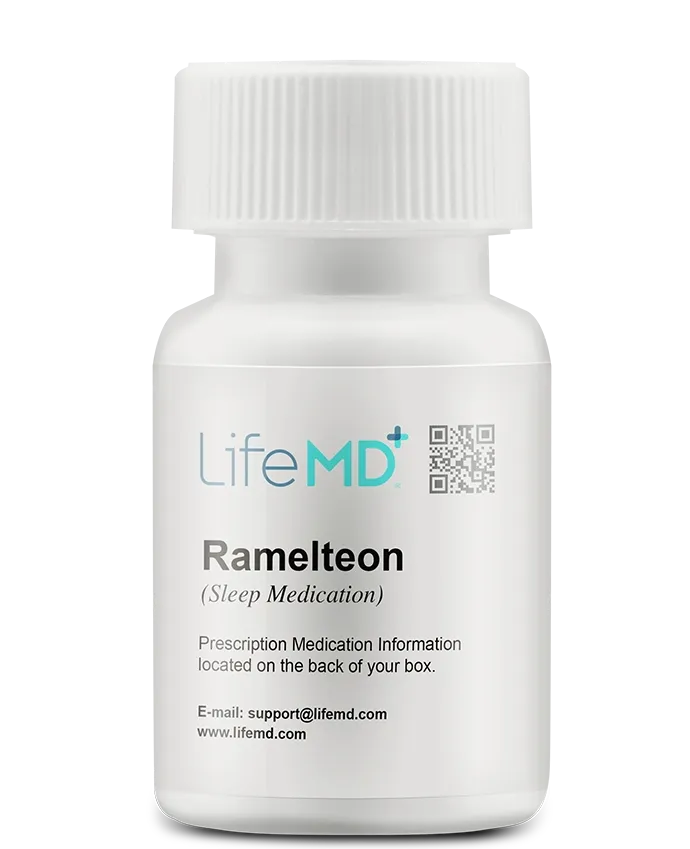
Ramelteon, an FDA-approved medication for trouble falling asleep. It works on the same receptors in the brain as melatonin, helping your body follow its natural sleep-wake cycle.
Low-dose doxepin, an FDA-approved medication for trouble staying asleep. It helps reduce nighttime wake-ups so you sleep through to morning.
Neither medication is a controlled substance, and both work alongside healthy habits like bedtime journaling.
With LifeMD, you can connect with a licensed healthcare provider from the comfort of your home within an hour. If appropriate, your provider may prescribe a medication and send it directly to your local pharmacy.
Skip the waiting room. Make an appointment and take control of your sleep today.
https://rx.lifemd.com/wc-primary?utm_source_site=blog-copy&utm_article=