
The Best Diets for Weight Loss: What Works and What Doesn't

If you've ever tried to find out the best diet for weight loss, you already know that there are hundreds of options, each promising dramatic results, and most of them contradict each other.
But, the research consistently shows that most people who lose weight on a diet gain it back within a year. Not because they lacked willpower, but because the diet wasn't sustainable for them in the first place. The question worth asking isn't which diet produces the fastest results — it's which approach you can actually stick with long enough to see lasting change.
This guide breaks down the most popular diets for weight loss and other methods that go beyond diet alone, including medical weight loss options for people who need more support.
Get prescription weight loss medication online.
Find out if you're eligible for GLP-1s, and get started on your weight loss journey for as low as $75/month.


What Makes a Diet Stick?
At a biological level, weight loss requires a calorie deficit — consuming fewer calories than your body burns. Every diet that produces weight loss, regardless of its rules, achieves this one way or another. What differs is how each diet gets you there, and how comfortable or sustainable that process is for different people.
Nutrient quality, hormonal effects, hunger management, and personal preference all influence how well a given diet plan for weight loss works in practice. With that framework in mind, here's how the most popular approaches stack up.
Key Point: How to Choose the Right Diet for You
The best diet for weight loss is the one that fits your life well enough that you can actually follow it. A few practical questions worth considering:
- Can you see yourself eating this way in two years, not just two weeks?
- Does it fit your food preferences, budget, and social life?
- Does it provide enough nutrients to support your energy and health?
- Do you have any health conditions that make certain approaches risky?
If you're considering a significant dietary change — especially anything in the extreme category — it's worth talking to a healthcare provider first. What works for one person can be counterproductive or even harmful for another.
Sustainable and Research-Backed Diets
These diets have the strongest evidence behind them and, more importantly, are realistic to maintain over time. They may not be the newest fads trending around weight loss, but they're the ones most likely to produce results that actually last.
Mediterranean diet
The Mediterranean diet is best for long-term weight management, cardiovascular health, and overall wellbeing. It consistently ranks among the healthiest dietary patterns in the world.
This diet emphasizes whole grains, vegetables, fruits, legumes, fish, and healthy fats like olive oil — with red meat and processed foods kept to a minimum. It doesn't involve calorie counting or rigid rules, which makes it one of the most sustainable long-term approaches available. Research links the Mediterranean diet to reduced cardiovascular risk, better blood sugar regulation, and steady weight loss over time. It won't produce dramatic results in a week, but the weight that comes off tends to stay off.
Pros: Flexible, enjoyable, nutrient-dense, backed by decades of research.
Cons: Slower results; requires cooking whole foods regularly.
High-protein diet
A high protein diet will work for anyone who’s looking to reduce hunger while preserving muscle and losing fat.
A high protein diet for weight loss works through several mechanisms at once: protein is more satiating than carbohydrates or fat, it has a higher thermic effect (meaning your body burns more calories digesting it), and it helps preserve lean muscle mass during a calorie deficit.
Protein diet foods for weight loss include chicken, fish, eggs, Greek yogurt, legumes, tofu, and cottage cheese. A seven day protein diet plan for weight loss is a popular entry point, but this approach is effective precisely because it's easy to maintain long-term — it's less a rigid diet and more a nutritional emphasis that fits into most eating styles.
Pros: Reduces hunger, supports muscle retention, and is flexible.
Cons: Can be expensive; excessive protein intake may stress kidneys in those with pre-existing conditions.
Calorie-controlled diet
The calorie-controlled diet is best for people who prefer flexibility and data-driven tracking.
A calorie controlled diet for weight loss is the most straightforward application of the calorie deficit principle: set a daily calorie target and stay within it, regardless of what you eat.
Apps like MyFitnessPal have made calorie tracking more accessible than ever. A reduced calorie diet for weight loss doesn't restrict any food groups, which many people find freeing. It also requires consistency and some
degree of nutritional literacy to ensure the calories you are eating are actually nourishing you. Used well, it's one of the most effective and evidence-based diet plans for weight loss available.
Pros: No food restrictions, flexible, well-studied.
Cons: Tracking can feel tedious; easy to undereat on nutrients while staying within calories.
Balanced whole foods diet
The balanced whole foods diet will work for those who want a sustainable lifestyle shift without strict rules. A balanced diet for weight loss doesn't come with a branded name or a specific macro split. It's built on the principle of eating mostly whole, minimally processed foods in reasonable portions. Vegetables, fruits, whole grains, lean proteins, and healthy fats form the foundation, with ultra-processed foods significantly reduced. Weight loss is slower with this approach, but it's arguably the most maintainable long-term because it doesn't feel like a diet. It's simply a healthier way of eating.
Pros: Highly sustainable, no tracking required, supports overall health.
Cons: Slower results; requires consistent cooking habits.
Effective Short-Term Diets
The diets below can deliver real results in the short term, but the research on long-term sustainability is mixed. They work best when used with a clear exit strategy — a plan for transitioning to a more maintainable approach once the initial goal is reached.
Ketogenic (keto) diet
The keto diet is effective for those looking for short-term results. It has also shown effectiveness in some people with insulin resistance or type 2 diabetes.
This diet drastically reduces carbohydrates (typically to under 50g per day) and replaces them with fat, pushing the body into a metabolic state called ketosis where it burns fat for fuel. Initial weight loss can be rapid and dramatic — but it's worth knowing that much of the early loss is water weight, as glycogen stores deplete. Long-term adherence is challenging for most people since the diet is highly restrictive socially and nutritionally. Some individuals do thrive on keto long-term, but it requires careful planning to avoid nutrient gaps.
Pros: Fast initial results, reduces appetite, may benefit metabolic health.
Cons: Very restrictive, hard to sustain, "keto flu" during transition, limited food variety.
Intermittent fasting
Intermittent fasting is best for people who prefer simplicity over food rules.
This isn't a diet in the traditional sense — it's an eating pattern that restricts food intake to specific time windows (commonly 16 hours fasting, eight hours eating). It works primarily by reducing the overall window in which you consume calories. Research suggests it's roughly as effective as continuous calorie restriction for weight loss — not more, not less — but some people find the simplicity of "just don't eat until noon" easier than tracking every meal. It can be socially limiting and challenging for people with a history of disordered eating.
Pros: Simple rules, no food restrictions, may improve insulin sensitivity.
Cons: Can cause hunger and irritability; not suitable for everyone; social limitations.
Plant-based or vegan diet
People motivated by ethics, environment, or overall health alongside weight goals may opt for a plant-based or vegan diet.
Plant-based diets are naturally lower in calories and saturated fat than omnivorous diets, and research links them to lower rates of obesity and chronic disease. However, weight loss results vary widely depending on food choices: a vegan diet built on whole foods looks very different nutritionally from one built on processed vegan alternatives. Sustainable long-term for those who are motivated, but requires planning to avoid deficiencies in B12, iron, omega-3s, and protein.
Pros: Nutrient-dense when done well, environmentally sustainable, linked to long-term health benefits.
Cons: Requires supplementation; weight loss depends heavily on food quality.
Extreme or Restrictive Diets
The approaches below are among the most restrictive diets for weight loss. While they can produce rapid results on the scale, the risks often outweigh the benefits. Fast weight loss is not always healthy weight loss, and these methods are difficult to sustain without professional supervision.
Liquid diet
A liquid diet for weight loss replaces solid meals with juices, shakes, or broths — resulting in very low calorie intake and rapid short-term weight loss. The risks are significant: muscle loss, nutritional deficiency, and a high likelihood of rebound weight gain when normal eating resumes. Medically supervised liquid diets exist for specific clinical situations (pre-surgery, for example), but DIY versions are not recommended as a primary weight loss strategy.
7-day diet plans and crash diets
A seven day diet plan for weight loss is one of the most searched topics in nutrition — and one of the most misleading. Rigid short-term protocols may produce visible results on the scale within a week, but the vast majority of that loss is water and glycogen, not fat. More concerning, crash dieting can slow metabolism, trigger muscle loss, and set up a cycle of yo-yo dieting that makes long-term weight management harder over time.
Very low calorie diets (VLCDs)
VLCDs typically provide 800 calories or fewer per day. Medically supervised versions — used in clinical settings for patients with obesity-related health conditions — can be appropriate and effective. Unsupervised VLCDs carry serious risks including heart arrhythmias, gallstones, and severe nutritional deficiencies. If you're considering a very low calorie approach, it should only be done under direct medical guidance.
Beyond Diet: Other Weight Loss Methods That Work
Changing what you eat may get you far. But for most people, diet alone isn't the whole picture.
Exercise builds lean muscle, which increases resting metabolism over time. It improves insulin sensitivity,
supports cardiovascular health, and has a well-documented positive effect on mood and adherence to healthy behaviors. Exercise alone is generally not sufficient for significant weight loss — the calories burned are often overestimated — but combined with dietary changes, it meaningfully accelerates progress and helps maintain weight loss long-term.
Sleep and stress management are underrated factors in weight management. Chronic sleep deprivation elevates ghrelin (the hunger hormone) and suppresses leptin (the fullness hormone), reliably increasing appetite. High cortisol from chronic stress promotes fat storage, particularly around the abdomen. Addressing these factors isn't optional — for many people, poor sleep and high stress are the reason a sound diet isn't producing results.

Foundayo® (orforglipron)

Wegovy® Pill (semaglutide)
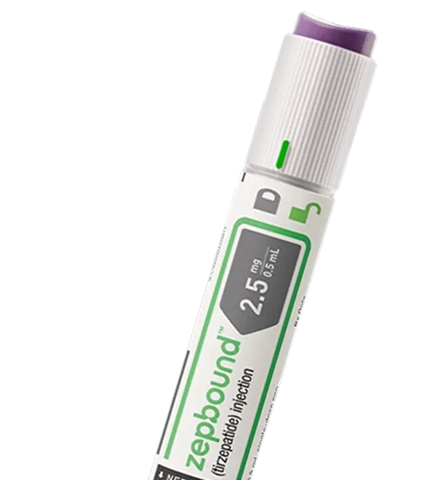
Zepbound® (tirzepatide)

Wegovy® (semaglutide)

Saxenda® (liraglutide)

Ozempic® (semaglutide)
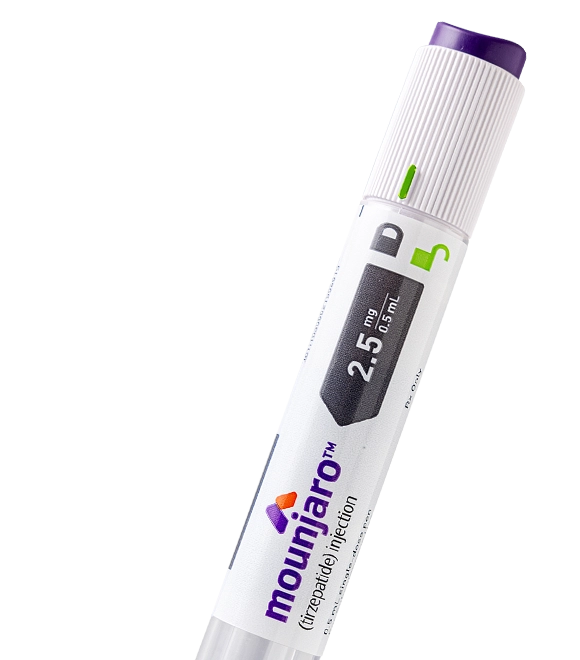
Mounjaro® (tirzepatide)
What is Medical Weight Loss?
For people who have tried multiple diets and lifestyle changes without sustained success, medical weight loss is an increasingly accessible and evidence-backed option. GLP-1 receptor agonists — a class of medications that includes semaglutide and tirzepatide — work by mimicking a hormone that regulates appetite and blood sugar. They slow gastric emptying, reduce hunger signals, and help the body respond more effectively to food intake.
Clinical trials have shown that GLP-1 medications, when combined with lifestyle changes, produce significantly greater weight loss than lifestyle changes alone. Many patients lose 15-20% of their body weight over 12-18 months. They're typically prescribed for adults with a BMI of 30 or higher, or 27 or higher with a weight-related health condition such as type 2 diabetes, high blood pressure, or sleep apnea.
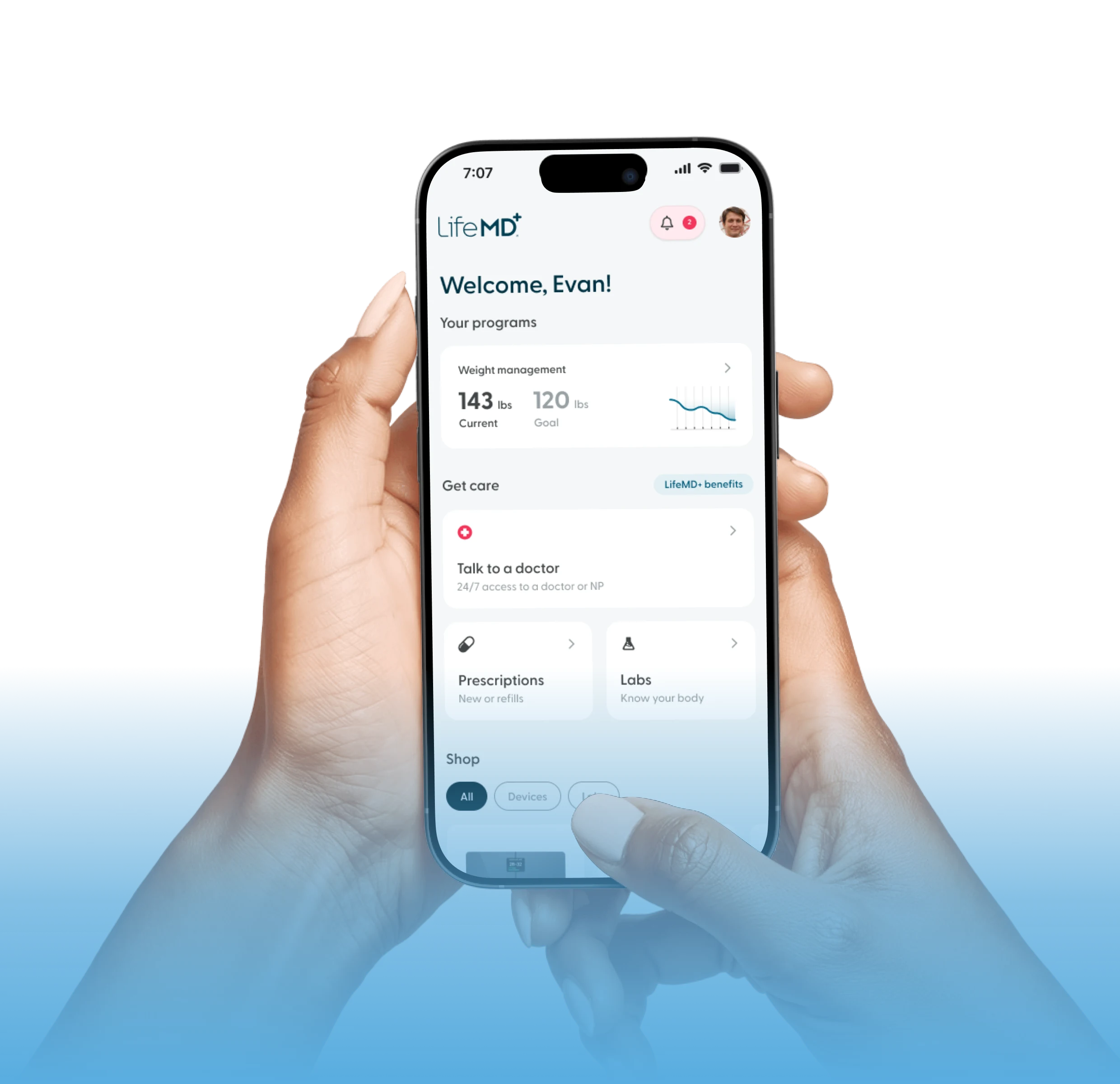
LifeMD's Weight Management Program connects patients with licensed medical providers through a telehealth platform. Providers evaluate each patient individually, discuss whether GLP-1 medications are appropriate, and provide ongoing support to help patients build the lifestyle habits that make medical weight loss sustainable. It's not a shortcut; it's a medically guided framework designed to address weight at its root causes.
To learn more about LifeMD's Weight Management Program, make an appointment today.