
Why You're Gaining Weight in Menopause Despite Doing Everything Right

Quick Read
No matter what you do, the scale keeps creeping up and your clothes fit differently. During menopause, shifting hormones move fat from your hips and thighs to your belly, where it drives inflammation. Resistance training, protein at every meal, and hormone therapy can all help, and GLP-1 medications add another powerful option. Working with a provider who understands how these tools fit together gives you the best chance of getting results.
Weight gain around the midsection is one of the most common frustrations women bring up during menopause. Many say they haven't changed a thing, yet their bodies feel like they belong to someone else.
Dr. Doug Lucas, Clinical Lead of Bone Health and Longevity Medicine at LifeMD, hears this all the time. Here, he answers the most common questions about why it happens and what you can do about it.
How Much Weight Do Women Typically Gain During Menopause?
Studies suggest women gain around a pound and a half per year, starting in mid-perimenopause and continuing through menopause. Dr. Lucas notes that averages rarely match what individual women describe, and every woman's experience is different.
He also points out that the number on the scale is only part of the story. "While on the outside we might see a shift in true weight, the scale goes up, there's a shift in body composition. But actually under the hood, what's happening in the body is even more concerning."
Feel Like Yourself Again
Connect with a licensed menopause provider who can help you understand your symptoms and determine if hormone replacement therapy is the right next step.


Why Does Fat Move to Your Belly During Menopause?
As hormones shift in midlife, fat starts to move. Women tend to lose fat from their thighs and buttocks, and more of it settles around the abdomen.
That's a shift from subcutaneous fat, the kind that sits just under the skin, to visceral fat, which wraps around your organs. Dr. Lucas calls it a shift in the wrong direction for your health.
Subcutaneous fat is relatively harmless from a medical standpoint. Visceral fat is metabolically active, which means it releases inflammatory substances into your body.
"Visceral fat becomes a big problem as we age because it increases inflammation, and we know that increased inflammation is one of the biggest drivers of chronic disease across the board, from your heart to your brain, to your bones and more."
Visceral fat can also affect your immune system, your sleep, and how you feel day to day.
Why are You Gaining Weight When Nothing Has Changed?
This is the question Dr. Lucas hears most often. Women tell him they're eating the same foods, moving the same amount, and sleeping the same hours, yet the scale keeps climbing.
He's quick to point out that no one needs to be perfect to deserve results. The frustrating part is that habits that worked for years suddenly stop working. Dr. Lucas goes on, "The amount that [women] move, the amount that they exercise, probably the amount that they sleep, the amount that they eat, what they eat, nothing has changed, and yet all of a sudden they're gaining weight. And that is not only frustrating, but, I think, also scary."
What has changed is what's happening inside. Your hormones are shifting, and your body is responding differently to the same routine.
Is Menopause Weight Gain Just Part of Aging?
Dr. Lucas pushes back on the idea that aging alone explains weight gain. Time and gravity are unavoidable, but he prefers to look at aging as a set of underlying changes, many of which can be addressed.
During perimenopause and menopause, estrogen and progesterone are only part of the picture. Cortisol, thyroid function, your immune system, and your gut all shift at the same time. Dr. Doug offers some reassurance: "All of these things are changing at the same time, and for a lot of them, we actually have tools to address them."
That's encouraging news. Weight gain in menopause is common, and it's also something you can do something about.
What Kind of Exercise Helps Most?
Resistance training is the most helpful type of exercise for managing weight during menopause, because it builds and preserves the muscle that keeps your metabolism strong. Dr. Lucas says the research on this keeps getting clearer, and he calls muscle the organ of longevity.
Muscle is a big driver of metabolic health. The more muscle you maintain, the higher your metabolism, which means you can eat enough real food to feel satisfied without gaining weight.
"Muscle really is the organ of longevity, and resistance training then is the key to maintaining or even building that muscle."
Lifting weights, using resistance bands, or doing bodyweight exercises all count. There's a lot more to gain from why muscle matters for longevity, including better balance, energy, and mood.
How Should You Eat During Menopause?
Dr. Lucas encourages women to see every meal as a chance to support their goals. In your 20s and 30s, your body may have tolerated less nutritious meals without much effect. In midlife, that flexibility shrinks.
Protein matters most. Each meal is an opportunity to signal your muscles to maintain or grow, and that takes enough protein in one sitting.
"In every meal that we consume, we need to eat at least 30 grams of protein in order to hit that muscle protein synthesis threshold."
He suggests 25 to 30 grams of protein per meal for most women, or closer to 20 grams for very petite women.
Timing matters too. Getting protein early in the day helps, even if breakfast is later in the morning. Trying to fit all your protein into dinner misses those earlier chances to support your muscles.
Can GLP-1 Medications Help With Menopause Weight Gain?
Yes, GLP-1 medications can help with menopause weight gain, and Dr. Lucas is excited about them. GLP-1 medications work by mimicking hormones your body already makes, and they've changed what's possible for weight loss.
Dr. Lucas remarks, "We've never had a tool that powerful. With powerful tools, though, we have to have an understanding of what's happening, and we have to use them cautiously."
These medications act on hormone receptors in your gut. They slow digestion, which helps you feel full longer on less food, and they can quiet cravings. Newer options target more than one hormone pathway, which can mean better results with lower doses and fewer side effects.
The tradeoff is that eating less can lead to eating too little. Getting enough protein while taking a GLP-1 is especially important for protecting muscle.
Get prescription weight loss medication online.
Find out if you're eligible for GLP-1s, and get started on your weight loss journey for as low as $75/month.


Can You Use GLP-1s and Hormone Therapy Together?
Yes, it’s safe to use GLP-1s and hormone therapy together under medical supervision But, Dr. Lucas prefers the term hormone optimization, which looks at all of your hormones together, including estrogen, progesterone, testosterone, thyroid, and the hormones GLP-1 medications target.
His role at LifeMD is building care plans where these treatments work together rather than in isolation. He also notes that emerging research suggests women may need a lower GLP-1 dose to reach their goals when their other hormones are optimized, which can mean fewer side effects.
Is There an Age Limit for GLP-1 Medications?
Dr. Lucas looks at biological age, meaning how healthy and active your body is, more than the number of birthdays you've had. He meets women in their seventies and eighties who are in excellent shape.
Still, he takes extra care with older women. Many already struggle to eat enough, and a medication that slows digestion and reduces appetite can make that harder. He says, "We really have to be cautious of the potential side effects for someone who is in that age bracket to make sure that they're still getting adequate protein, still getting adequate nutrition while they are getting rid of and letting go of that visceral fat."
Your provider will weigh your overall health, nutrition, and goals to decide whether a GLP-1 is a good fit.
How Do You Find the Right Provider?
The symptoms of shifting estrogen, progesterone, testosterone, and thyroid hormones overlap a lot, so it helps to work with a provider who understands all of them. Dr. Lucas notes that there's no single medical specialty devoted to hormone optimization, which makes the search harder.
He suggests looking for a provider with specific training in hormones and menopause, such as certification through The Menopause Society, and paying attention to what they offer and talk about. At LifeMD, he's building training for providers to support this kind of whole-picture care.
He also encourages women to come in with an open mind. Doing your own research is great, but online information is often slanted toward one solution.
"You really need to work with a provider that understands those things and then be willing to try different things to figure out exactly what the underlying issue is, because it might take more than one."
How Can LifeMD Help With Menopause Weight Gain?
The LifeMD Women's Health Program connects you with licensed menopause providers who look at the full picture, including your hormones, symptoms, body composition, and goals. Your provider can help you decide whether hormone therapy belongs in your plan to ease symptoms and support a healthier body composition.
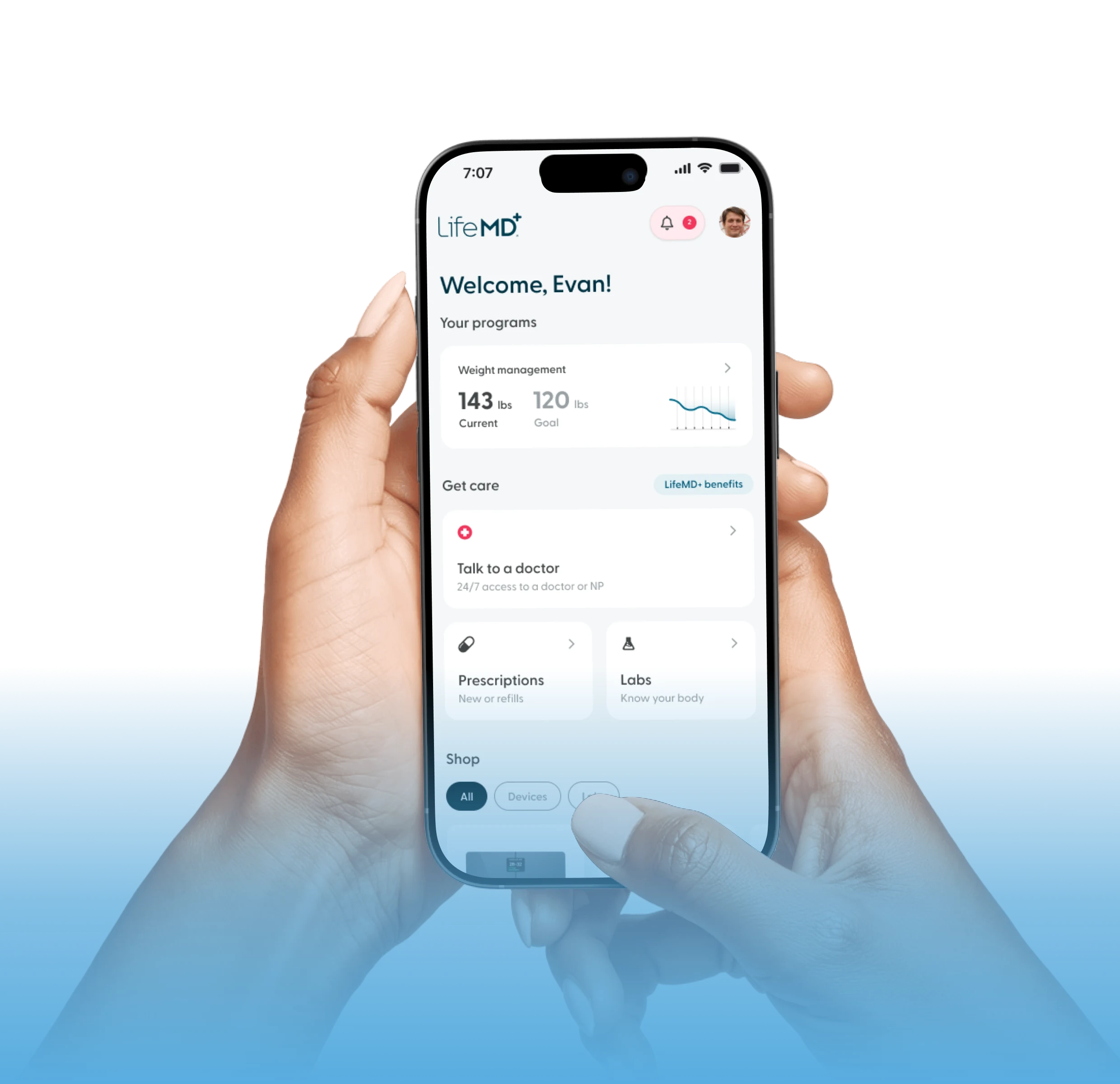
For women who need more support with weight, LifeMD’s Weight Management Program offers GLP-1 medications, prescribed and monitored by licensed providers, that can work alongside hormone therapy.
Get started today and get a plan that works with your body as it changes.
The information provided is not a substitute for professional medical advice and is for informational purposes only. Availability of specific treatments and offerings varies by state. Medications prescribed if clinically appropriate based on completion of required consultation.