
Menopause After 60: Managing Symptoms at Any Stage

Quick Read
You're past 60, and you're dealing with night sweats, vaginal dryness, or achy joints that you assumed were just part of getting older. Menopause symptoms don't follow a set timeline, and they can linger, return, or show up for the first time years after your last period. Systemic hormone therapy may still be an option after a careful review, and localized estrogen is safe and effective at any age. You deserve treatment for these symptoms whenever they appear.
Menopause is the point in time 12 months after your last period. The symptoms that come with it follow their own schedule. For many women, hot flashes fade within a few years. For others, they hang on well into their 60s and 70s, or new symptoms appear long after menopause seemed to have finished.
Many of these changes get written off as normal aging. Some are, and many are tied to the long-term drop in estrogen, which can be treated. Age alone is rarely a reason to stop looking for relief.
Feel Like Yourself Again
Connect with a licensed menopause provider who can help you understand your symptoms and determine if hormone replacement therapy is the right next step.


Can You Still Have Menopause Symptoms After 60?
Yes, many women have menopause symptoms after 60, and some experience them for the first time in their 60s or later. There's no set window that contains when symptoms begin or how long they last.
Hot flashes and night sweats are a good example. In the Study of Women's Health Across the Nation (SWAN), a long-term study of women going through menopause, hot flashes lasted a median of about seven years, and for some women they continued for more than a decade.
Other symptoms, especially those tied to vaginal and urinary health, tend to get worse over time rather than better. That's because the tissues affected keep changing as estrogen stays low year after year.
Why Can Symptoms Start or Return Years After Menopause?
Symptoms can start or return years after menopause because the effects of low estrogen build gradually, and many tissues take time to show the change. Estrogen supports your vaginal and bladder tissue, skin, joints, bones, and blood vessels. When levels stay low for years, those tissues slowly thin, dry, and lose elasticity.
A few other factors can play a role:
Stopping hormone therapy: Many women who stop HRT, sometimes after being told they'd been on it long enough, see hot flashes and night sweats come back.
Life changes: Stress, poor sleep, illness, or new medications can bring symptoms to the surface.
Cumulative changes: Some symptoms, like vaginal dryness or bone loss, start quietly and only become noticeable once they've progressed.
Having an easy menopause in your 50s doesn't guarantee your 60s will feel the same. Symptoms can appear at any point, and they're worth taking seriously when they do.
Which Symptoms After 60 are Often Mistaken for Aging?
Vaginal dryness, frequent UTIs, joint pain, poor sleep, and thinning skin are some of the most common menopause symptoms after 60 that get chalked up to aging. Here's how low estrogen plays a role in each.
Symptom | How low estrogen plays a role |
Vaginal dryness, itching, or painful sex | Vaginal tissue becomes thinner, drier, and less elastic |
Frequent UTIs or urinary urgency | Bladder and urethral tissue weaken, and healthy vaginal bacteria decline |
Leaking urine | Pelvic floor and urethral support lose strength |
Joint aches and stiffness | Estrogen helps regulate inflammation and supports cartilage |
Hot flashes or night sweats | The brain's temperature control stays sensitive to low estrogen |
Trouble sleeping | Night sweats and hormone shifts break up deep sleep |
Dry, thinning skin | Collagen and skin hydration drop without estrogen |
Thinning hair | Hair growth cycles shorten as hormone balance shifts |
Bone loss | Bone breaks down faster than it rebuilds |
Vaginal, urinary, and sexual symptoms are grouped under a condition called genitourinary syndrome of menopause (GSM). It affects many postmenopausal women and tends to progress without treatment. Recurrent UTIs after menopause are often part of the same picture.
These symptoms can also have other causes, so it's worth having a provider take a look before assuming either way.
What is the Critical Window for Hormone Therapy?
The critical window is the period before age 60, or within 10 years of menopause, when starting systemic hormone therapy offers the best balance of benefits and risks for most healthy women.
The idea comes from research showing that timing matters. When estrogen is started earlier, blood vessels are generally healthier and respond well. When systemic estrogen is started many years after menopause, blood vessels may have already changed, and the risk of blood clots, stroke, and heart disease can be higher, especially with oral pills.
The FDA's updated labeling for menopausal hormone therapy also highlights this window as the best time to begin systemic treatment.
The critical window guides when to start systemic hormones. Women already on HRT can often continue past it, and localized estrogen can be started at any age.
Are You Too Old for HRT After 60?
Many women can still use hormone therapy after 60, and the right approach depends on whether you're continuing treatment or starting it for the first time.
Continuing HRT after 60
The Menopause Society says hormone therapy doesn't need to be routinely stopped after age 60 or 65. Women can continue for persistent hot flashes, quality of life, or bone protection after a review of their benefits and risks.
Starting HRT after 60
Beginning systemic hormone therapy later is a more individual decision. Your provider will weigh your symptoms, how long it's been since menopause, and your heart, clot, and breast cancer risk. Transdermal options like patches, gels, and creams are often preferred at this stage because they carry a lower risk of blood clots than oral pills.
For some women, systemic HRT will still be a good fit. For others, a different approach makes more sense, and that's where localized estrogen often comes in.
Why is Localized Estrogen a Good Option After 60?
Localized estrogen is a good option after 60 because it treats vaginal and urinary symptoms directly with a very low dose that stays mostly in the area where it's applied. Very little reaches the bloodstream, so its risk profile is much lower than systemic hormone therapy.
It comes in several forms:
Vaginal tablets or inserts
Vaginal creams
Vaginal rings
Localized estrogen can ease dryness, itching, and painful sex, and it can help lower the risk of recurring UTIs by restoring healthier tissue and vaginal bacteria. It's considered safe for most women at any age, including those who've never used hormone therapy and those well past the critical window.
There are a few types of localized estrogen to choose from, and your provider can help you pick the one that fits your comfort and routine. Many women use it alongside systemic HRT, and others use it on its own.
What Else Can Help With Menopause Symptoms After 60?
Several nonhormonal treatments and daily habits can ease symptoms after 60, either alongside hormone therapy or in place of it.
Nonhormonal prescriptions for hot flashes: Newer medications like elinzanetant (Lynkuet) target the brain's temperature control center without using hormones.
Vaginal moisturizers and lubricants: These can add comfort day to day and during sex, and they pair well with localized estrogen.
Pelvic floor therapy: A specialized physical therapist can help with leaking, urgency, and pelvic discomfort.
Strength training: Resistance exercise helps protect bone and muscle and can ease joint stiffness.
Bone health checks: A DEXA scan shows where you stand and guides treatment if you're losing bone.
Sleep habits: A cool bedroom, consistent schedule, and limited evening alcohol can reduce night waking.
How Do You Bring Up Symptoms With Your Provider?
The best way to bring up symptoms after 60 is to name them directly and ask whether menopause could be the cause. Many providers won't ask about hot flashes or vaginal dryness at this age, so starting the conversation yourself makes a difference.
Before your visit, it helps to note:
Which symptoms you have and when they started
Whether they're new, ongoing, or came back after stopping HRT
How they affect your sleep, comfort, relationships, or daily life
Any history of blood clots, stroke, heart disease, or breast cancer
Any hormone therapy you've used in the past and how it worked
With that information, your provider can help you weigh systemic HRT, localized estrogen, nonhormonal options, or a combination.
How Can LifeMD Help With Menopause Symptoms After 60?
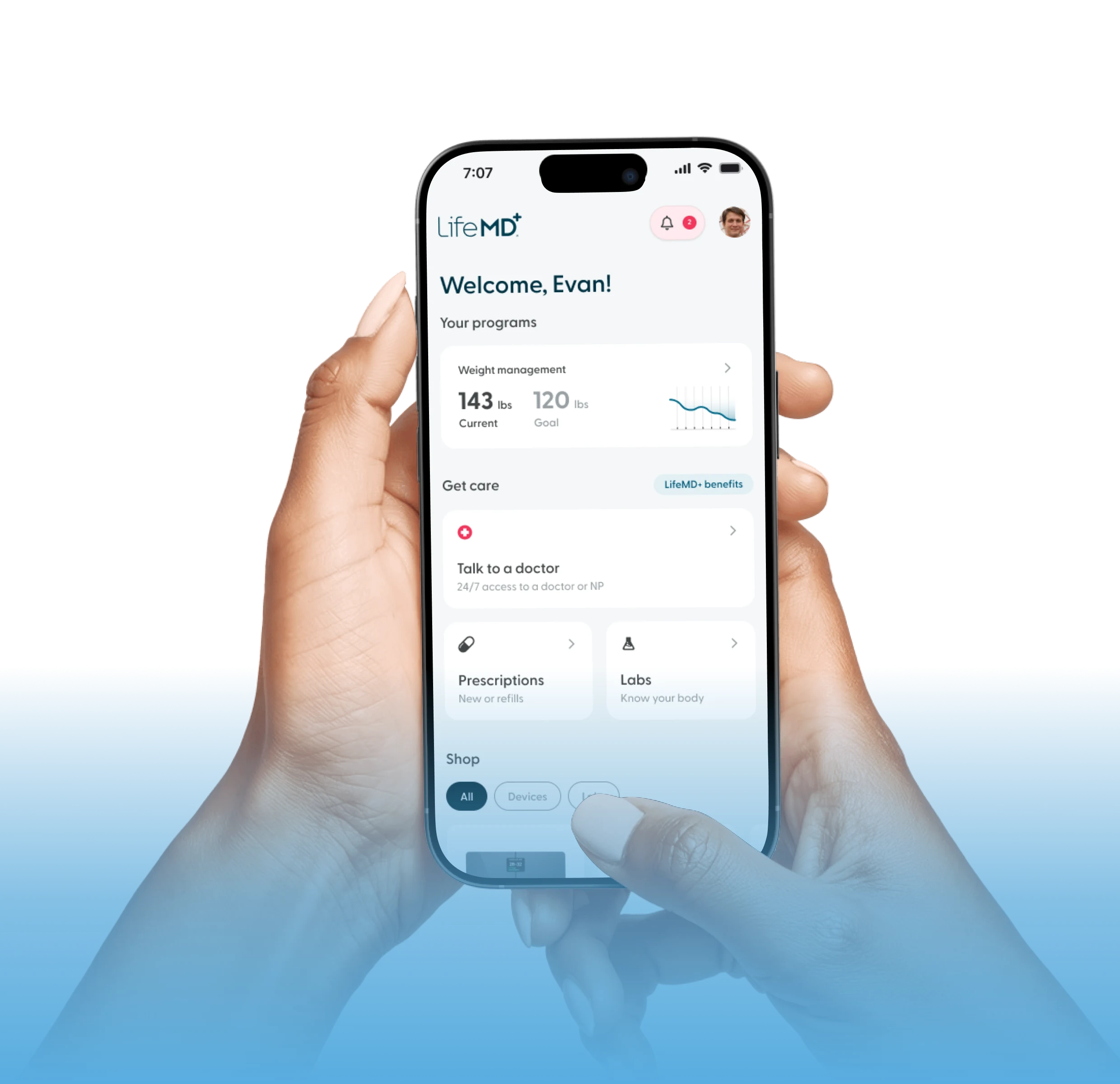
The LifeMD Women's Health Program connects you with licensed menopause providers who treat symptoms at every stage, including after 60. Your provider will review your health history and help you find the right fit, whether that's systemic hormone therapy, localized estrogen, or another option.
Take the free assessment to see if you qualify for care that meets you where you are.
The information provided is not a substitute for professional medical advice and is for informational purposes only. Availability of specific treatments and offerings varies by state. Medications prescribed if clinically appropriate based on completion of required consultation.