
Is Telemedicine Legitimate for Ongoing Medical Care?

Ongoing care typically involves follow-up visits, medication management, monitoring labs and home vitals, behavior coaching, and stable chronic disease check-ins. It's different from initial diagnoses or acute issues requiring immediate hands-on evaluation. This distinction matters: telehealth excels at longitudinal management of known conditions but has clear limitations for new, undiagnosed problems.
Can Virtual Care Replace in-Person Visits for Ongoing Health Issues?
A 2023 review looked at 20 studies covering over 4,000 patients using telehealth for chronic conditions. Patients reported better quality of life, improved ability to manage their own care, and better medication adherence. But when researchers dug deeper into measurable outcomes like depression, anxiety, or self-care behaviors, the results were mixed — telehealth didn't show clear improvements in these areas.
A 2025 study tracking five different medical specialties found that licensed healthcare providers who used more telemedicine had patients with fewer ER visits and hospitalizations. Importantly, patient outcomes didn't get worse compared to in-person care.
Licensed telehealth providers can prescribe medications when clinically appropriate and compliant with state regulations. Many states have specific requirements for controlled substances, often requiring an established provider-patient relationship or in-person evaluation for certain medication classes.
Conditions Where Telehealth Demonstrates Effectiveness
Weight loss programs
A 2024 study comparing virtual versus in-person behavioral therapy for obesity found nearly identical results – patients lost about 23-25% of their excess weight either way, with similar dropout rates. Research shows that telehealth weight programs work best when they last six to 12 months and include regular check-ins with a provider.
Hormone therapy
Testosterone replacement and menopause hormone therapy can be managed effectively via telehealth when done properly. This means starting with baseline lab work, scheduling regular virtual appointments, doing periodic follow-up lab tests, and coordinating with your licensed healthcare provider. A 2021 review confirmed this approach meets medical guidelines and improves access to care.
Chronic conditions
Diabetes, high blood pressure, and stable mental health conditions often work well with virtual visits because you can track key numbers yourself (blood sugar, blood pressure, mood patterns) and share that data with your provider to adjust medications as needed.
When in-Person Care Remains Necessary
A 2024 review found that virtual exams work just as well as in-person visits about 89% of the time.
But in 11% of cases, telehealth fell short. This happened mainly when licensed healthcare providers needed to listen to your lungs with a stethoscope, feel your abdomen for abnormalities, test your reflexes, or physically manipulate joints and muscles to diagnose problems.
Please seek immediate in-person medical attention or call 911 for:
Chest pain or pressure
Shortness of breath or difficulty breathing
Sudden one-sided weakness or facial drooping
Severe abdominal pain
Uncontrolled bleeding
Other concerns that likely require prompt in-person evaluation:
New lumps or masses requiring examination
Persistent unexplained bleeding
Progressive neurological symptoms
Joint instability or inability to bear weight
Skin lesions requiring biopsy
Many state regulations specify that "when the standard of care requires the use of diagnostic testing and performance of a physical examination," in-person assessment is medically necessary.
Quality Standards and Accreditation
Three major organizations have established telehealth-specific accreditation programs to ensure quality and safety:
The Joint Commission launched its Telehealth Accreditation Program effective July 1, 2024, establishing standards for leadership, human resources, emergency management, information security, provision of care, and patient rights.
National Committee for Quality Assurance (NCQA) developed Virtual Care Accreditation through a pilot program with 18 organizations, focusing on equitable access, digital health literacy, care quality, and outcome tracking.
URAC offers telehealth accreditation standards addressing quality and coordination of care, access, safety, systems integrity, consumer protection, and regulatory compliance.
Accredited programs demonstrate competence in evidence-based clinical protocols, verified provider credentials, quality monitoring systems, HIPAA-compliant security, documented emergency procedures, and complete encounter documentation.
What to Ask When Choosing Providers
About your provider's qualifications:
Are they board-certified and licensed to practice in your state?
Will you see the same provider each time, or will it be whoever's available?
What's their specific experience treating your condition?
About how they practice:
Which conditions do they treat virtually, and when do they refer you for in-person care?
What happens if you have a medical emergency or urgent issue?
How do they handle lab work and imaging when you need it?
Will they communicate with your primary care licensed healthcare provider or other specialists?
About privacy and quality:
Is their platform HIPAA-compliant with encrypted messaging?
Do they hold any accreditations from recognized healthcare organizations?
What outcomes do they track to ensure quality care?
Be cautious if a provider:
Prescribes controlled substances without a thorough evaluation
Has no clear plan for emergencies or when to escalate care
Pushes expensive supplements or non-FDA approved products
Guarantees specific results
Doesn't communicate with your existing licensed healthcare providers
How LifeMD Approaches Chronic Care Management
LifeMD employs licensed providers who are licensed to practice in their respective states. They offer virtual care for over 3,500 medical conditions with particular focus on chronic disease management, weight management, hormone therapy, and primary care services.
The platform's clinical model includes dedicated care teams to promote continuity, comprehensive initial consultations beyond brief transactional visits, laboratory coordination with virtual review of results, prescription management with home delivery options when clinically appropriate, and regular follow-up monitoring to assess treatment effectiveness and adjust plans.
For weight management, providers follow evidence-based protocols that may include comprehensive metabolic assessments, lifestyle counseling, and FDA-approved medications like GLP-1 agonists when clinically indicated. Hormone therapy programs incorporate pre-treatment laboratory testing, individualized treatment plans, and ongoing monitoring for safety and efficacy.
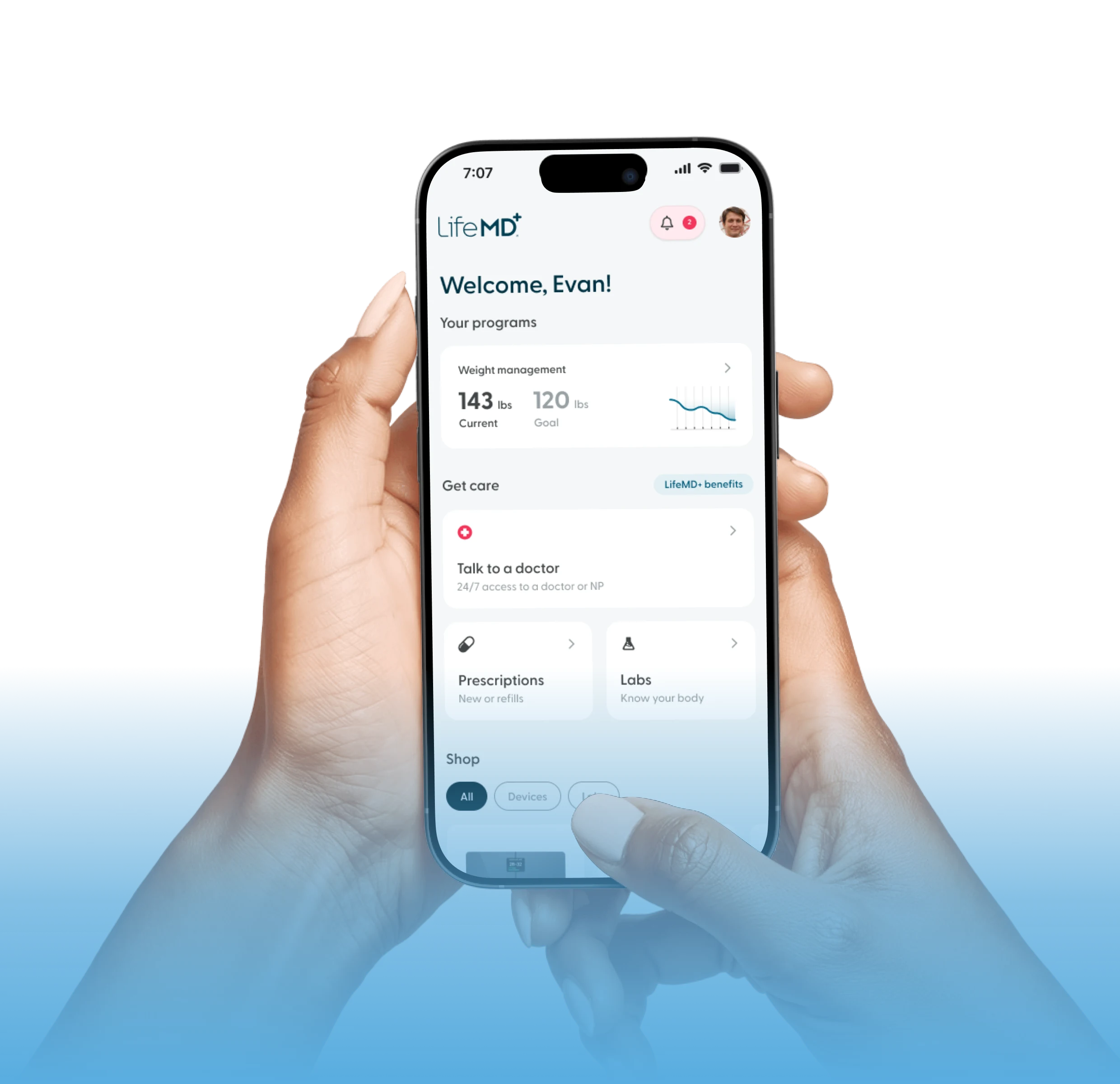
With LifeMD, you can connect with a licensed healthcare provider from the comfort of your home within an hour. If appropriate, your provider may prescribe a medication and send it directly to your local pharmacy.
For even more flexibility, a LifeMD+ membership gives you 24/7 access to care, same-day prescription refills, exclusive wellness perks, and easy access to lab testing — all designed to make managing your health simple and stress-free.
Skip the waiting room. Join LifeMD and take control of your health today.