
How Online Weight Loss Programs With Prescription Medications Actually Work
Online weight loss programs with prescription medication have transformed how people access medical weight management care. By connecting patients with licensed healthcare providers through secure digital platforms, these programs offer a convenient alternative to traditional in-person clinic visits while maintaining the same clinical standards and oversight.
Your Weight Loss Journey Through Telehealth
Most online weight loss programs follow a similar structure, though specific details vary by provider.
Ready to achieve your weight loss goals?
Shed pounds with GLP-1 medication prescribed online by licensed healthcare providers for as low as $75/month.

Step 1: Initial medical assessment
When you get started, you'll fill out a detailed online intake form. These are typically straightforward and walk you through everything step by step. You'll be asked about your medical history, current medications, previous weight loss attempts, and your goals.
This helps providers get a complete picture of your health so they can determine whether prescription weight management medication is the right fit for you and flag any potential contraindications before you begin.
Be sure to verify that the intake form is fully HIPAA-compliant and goes well beyond basic information. The more your providers understand about your health history, the better they can support you.
Step 2: Identity verification and insurance
Legitimate programs require identity verification using government-issued photo ID. If applicable, you'll provide insurance information for coverage verification.
Identity verification ensures patient safety, prevents prescription fraud, and maintains regulatory compliance.
It’s important to ask about how your personal information is protected and what data security measures are in place.
Step 3: Virtual consultation
You'll then meet with a licensed healthcare provider via secure video conference. The provider will review your medical history, discuss treatment options, explain potential benefits and risks, and answer your questions.
This establishes the provider-patient relationship required for prescribing and ensures you receive individualized medical advice.
Be sure to confirm the provider is licensed in your state, ask about their credentials, and ensure the visit is a real-time video consultation, not just a form review.
Step 4: Prescription and medication delivery
If the provider determines treatment is appropriate, they'll send your prescription to a pharmacy. Medication may be shipped directly to your home or available for pickup at a local pharmacy.
Proper medication sourcing ensures you receive quality-controlled products with accurate dosing.
When choosing a weight management program, you'll want to confirm that your medication is properly sourced, accurately dosed, and that the full ingredient list is transparent and available to you. These aren't just good questions to ask, they're things you deserve to have answered before starting any treatment.
Step 5: Ongoing monitoring and support
Quality programs include regular follow-up appointments, typically every three to four months or as needed for dose adjustments. Ongoing care ensures treatment safety, monitors progress, addresses side effects, and adjusts the plan as needed.
Be sure to know how to reach your provider between appointments and what the process is for urgent concerns.
Does Telehealth Weight Management Work?
The short answer is yes, when it's done right. Research consistently shows that virtual weight management programs can be just as effective as in-person care.
A 2024 study found that nearly half of telehealth participants lost 5% or more of their body weight over 12 weeks, which is nearly identical to results seen in traditional in-person programs. Both groups saw meaningful reductions in weight, body fat, and waist circumference.
A separate review of digital weight loss programs found that 60% of studies reported significant weight loss outcomes. The common thread in the most successful programs? Behavioral support. Whether virtual or in-person, programs that combined coaching, education, and regular check-ins consistently outperformed those that relied on medication alone.
The key to success appears to be comprehensive support. Programs combining medication with coaching, education, and regular check-ins tend to outperform medication-only approaches.
How Much Do Weight Management Programs Typically Cost?
The total cost of a telehealth weight management program typically comes from a few different sources, so it's helpful to understand each one before committing. Most programs charge a monthly membership fee ranging from $75 to $300 or more, which usually covers provider consultations, care coordination, and access to the platform.
Medication is typically billed separately. If you have insurance coverage, you may pay a copay of $25 to $100, but without insurance, brand-name GLP-1 medications can run anywhere from $900 to $1,300 or more per month, though some programs offer discounted alternatives. It's also worth noting that some manufacturers offer their own cash-pay programs or savings cards that can significantly reduce out-of-pocket costs for brand-name medications.
Lab work, like metabolic panels, can add another $100 to $300 if not covered by insurance, though certain programs include this in their membership. Shipping and pharmacy fees may also apply depending on how your medication is fulfilled.
A trustworthy program will always be upfront about what's included in your membership and what costs extra. If that information is hard to find, that's worth paying attention to.
Comparing Program Models
Online weight loss programs vary in structure and offerings:
Subscription vs. one-time fee
Most reputable programs operate on subscription models with ongoing monthly fees. Subscription models typically include regular provider access, follow-ups, and dose adjustments. Some platforms charge higher one-time consultation fees but lower monthly costs thereafter.
Medication-only vs. comprehensive support
Basic programs focus solely on prescribing and shipping medication. Comprehensive programs add behavioral coaching, nutrition guidance, lifestyle education, and accountability tools. Research suggests comprehensive approaches produce more sustainable results.
FDA-approved vs. compounded medications
Many programs offer FDA-approved brand-name GLP-1s, while some also offer compounded versions, which can vary in quality and aren't evaluated in large clinical trials.
Key Point: Understanding Compounded GLP-1 Medications
- Compounded medications may use different salt forms of semaglutide or tirzepatide than FDA-approved products. Important safety considerations:
- Compounded products haven't undergone the same rigorous FDA review process as brand-name medications
- Dosing errors and quality inconsistencies have been reported with some compounded products
- Availability and legality may depend on drug shortage status and FDA enforcement priorities, which have been in flux
- If considering compounded medication, ask specific questions about the compounding pharmacy's accreditation, ingredient sourcing, and quality control measures
The FDA has issued warnings about compounded semaglutide products containing incorrect salt forms or improper dosing.
What Makes a Weight Management Program Legitimate and Safe
With so many options out there, it's important to know what to look for. A reputable program will have licensed healthcare providers who are authorized to practice in your state, and will conduct a thorough medical evaluation – including a review of your health history, current medications, and any contraindications – before prescribing anything. A program that skips this step is a red flag.
You'll also want to look for providers with relevant credentials, such as board certification in obesity medicine, internal medicine, or family medicine. Quality programs will incorporate baseline lab work to monitor your health throughout treatment, be transparent about pricing and what's included, and make it easy to communicate with your care team. If a program is hard to reach or vague about costs, that tells you something too.

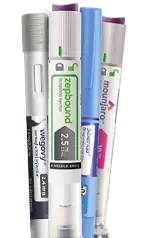
Foundayo® (orforglipron)

Wegovy® Pill (semaglutide)
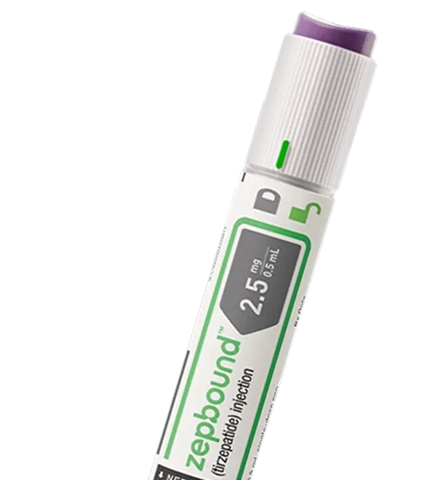
Zepbound® (tirzepatide)
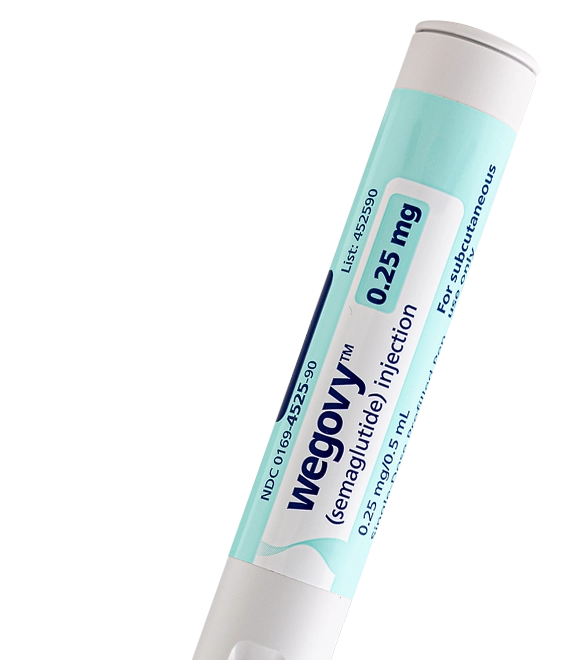
Wegovy® (semaglutide)

Saxenda® (liraglutide)
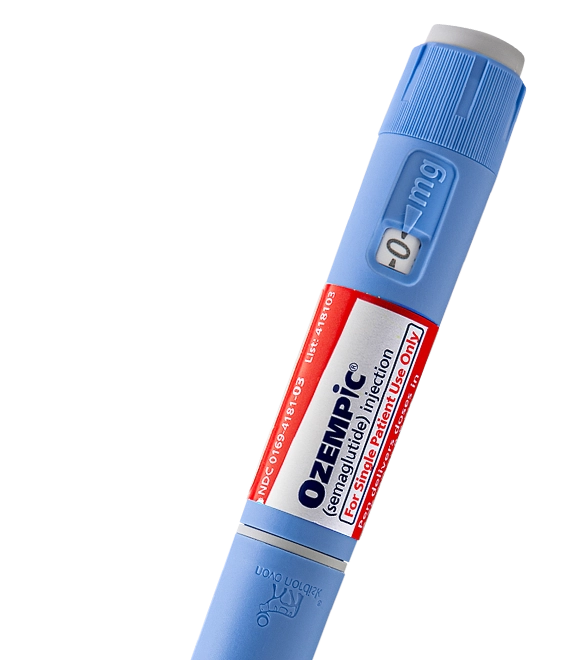
Ozempic® (semaglutide)
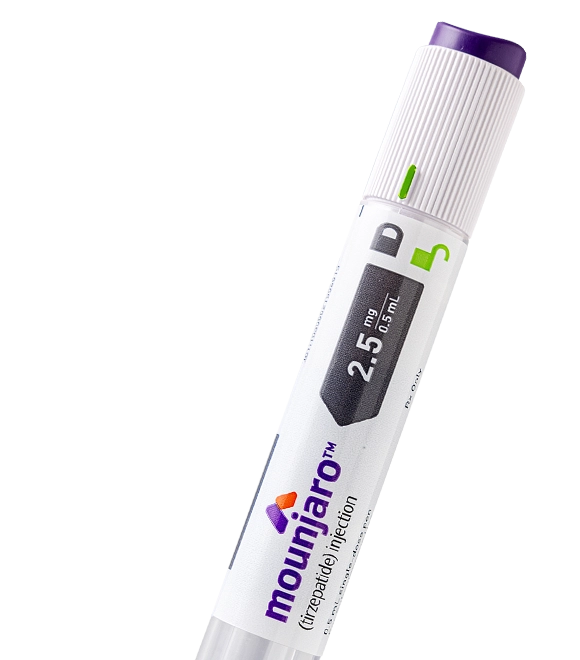
Mounjaro® (tirzepatide)
Signs a program may be unsafe
Watch for these warning signs when evaluating online weight loss programs:
No video visit or real clinical evaluation before prescribing medication
Won't confirm the medical professional is licensed in your state or provide license numbers
Mentions "semaglutide salts" without clear explanation or vague sourcing for active ingredients
No plan for labs or follow-up appointments when clinically indicated
Pricing structure is unclear about program fees versus medication costs
Promises guaranteed weight loss amounts or "too good to be true" results
Pressure to start immediately without adequate time to ask questions
No clear process for reporting side effects or reaching providers with concerns
LifeMD's Approach to Comprehensive Care
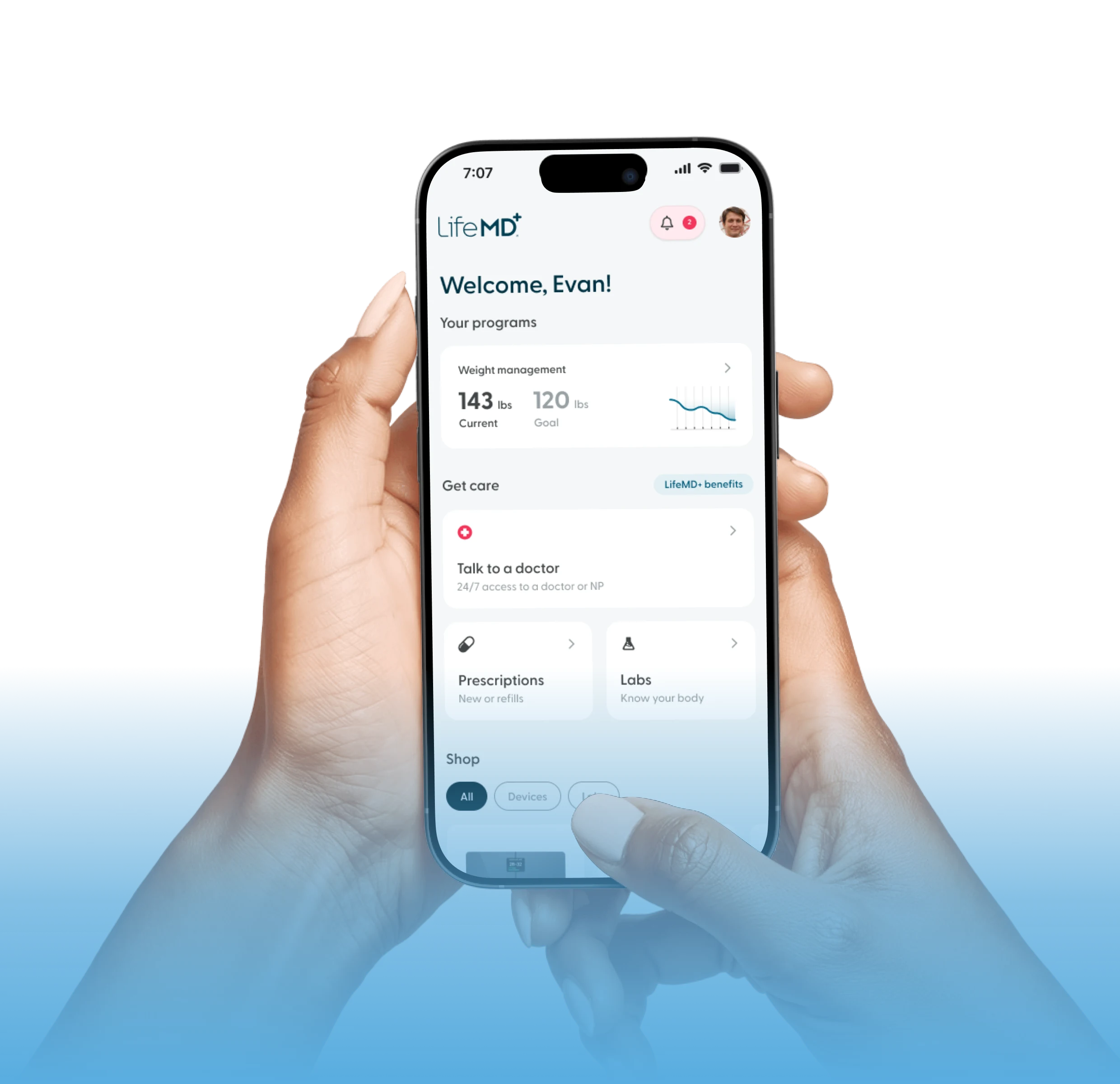
LifeMD's Weight Management Program exemplifies comprehensive telehealth weight management. The program combines several key elements:
Patients begin with a free online medical intake form, followed by enrollment (if eligible) and a virtual video consultation with a LifeMD-affiliated licensed healthcare provider. The provider conducts a thorough evaluation and, if appropriate, prescribes FDA-approved GLP-1 medications like Wegovy® or Zepbound®.
The program incorporates metabolic testing. Labs are encouraged initially and may be required before medication refills depending on individual treatment plans and clinical protocols. This ensures baseline health data and ongoing monitoring.
Members receive insurance verification assistance to help determine medication coverage, with options for both covered and self-pay medications. The program offers brand-name FDA-approved medications and may present alternative options based on individual needs and insurance coverage.
Ongoing support includes complimentary "6S appointments" focusing on six key health areas. Members have access to educational resources and can connect with their care team through secure messaging.
The program starts as low as $75 monthly with annual plans (program fee; medication cost is separate and depends on insurance or self-pay options), with flexibility to cancel anytime. LifeMD offers a satisfaction guarantee: if members don't experience at least 10% weight reduction after one year, they can receive a refund.
Learn more about the LifeMD Weight Management Program and find out if you qualify today.