
How Do At-Home, Self-Collection Lab Tests Work?

Getting lab work done used to mean scheduling a facility visit, finding a convenient location, and carving time out of your day for something you'd probably been putting off. At-home, self-collection lab tests have changed that. Today, you can collect a sample at home, mail it in, and receive results digitally – without leaving your house.
At-home testing has grown significantly as part of the broader expansion of telehealth. It removes most of the friction that gets in the way of routine health monitoring, particularly for people who don't have a primary care provider, have busy schedules, or simply want a more convenient way to stay on top of their health.
This guide covers everything you need to know about how at-home self-collection tests work, how reliable they are, what types are available, and how LifeMD integrates them into your care. If you're looking for a broader overview of online lab testing generally, our guide to how online lab tests work is a useful starting point.
What are At-Home, Self-Collection Lab Tests?
At-home, self-collection lab tests are diagnostic tests you collect yourself – at home, on your own schedule – and mail to a certified laboratory for analysis. The results are delivered digitally, typically through a patient portal or app, usually within a few business days.
It's worth distinguishing between two types of at-home tests that are easy to conflate. Rapid at-home tests – like the COVID antigen tests that became ubiquitous in recent years – are read at home within minutes and don't involve a lab at all.
Self-collection lab tests are different: you collect the sample at home, but the analysis happens at a CLIA-certified laboratory, the same kind used for provider-ordered tests done at a facility. The "at-home" part refers to where the sample is collected, not where it's processed.
Depending on the test, samples collected at home may include a finger-prick blood sample, a urine sample, a saliva sample, or a swab. Each kit includes everything you need for collection, along with step-by-step instructions and prepaid return shipping.
How Do At-Home Lab Tests Work? A Step-by-Step Breakdown
The process is more straightforward than most people expect. Here's what it looks like from start to finish.
Step 1: Order your kit
Depending on the platform, you can order an at-home lab test kit directly online, through a telehealth provider, or as part of a membership program. At LifeMD, at-home kits are available to all LifeMD+ members and can be ordered directly through the platform. Orders are fulfilled within one to two business days.
Step 2: Receive your kit
Your kit typically arrives within two to five business days depending on your location. You'll receive notifications by email, text, and through your LifeMD patient portal when your kit ships and again when it's delivered. Everything you need for collection is included – lancets, collection tubes or cards, specimen bags, and prepaid return shipping.
Step 3: Collect your sample
Each kit includes written step-by-step instructions for collecting your sample, packaging it, and preparing it for return shipping. For additional guidance, LifeMD also provides a detailed walkthrough video. Finger-prick blood collection, the most common method for at-home panels, involves a small lancet device that produces a quick, minimal prick. Following the instructions carefully is the most important factor in ensuring an accurate result
Step 4: Mail your sample
Once your sample is collected and packaged according to the instructions, drop it in the mail using the prepaid shipping label included in your kit. Some tests have specific requirements around how quickly the sample should be mailed after collection – the instructions will note any timing considerations.
Step 5: Your sample is processed
Once the lab receives your sample, processing typically takes three to five business days. Your sample is analyzed at a CLIA-certified laboratory – the same type of certified facility used for provider-ordered tests done at a draw site.
Step 6: Receive your results
When your results are ready, you'll receive a notification via email, text, and your LifeMD patient portal. Results are posted to the patient portal, where you can view them at any time. Please note that results may not be immediately reviewed by your provider, but you can schedule an appointment to discuss your results if you have questions.
How Reliable Are At-Home Lab Tests?
The reliability of a lab test comes down to two things: how the sample is collected and where it's processed. On the processing side, at-home self-collection tests use the same CLIA-certified laboratories as provider-ordered tests done at a draw site. CLIA certification sets strict federal standards for lab accuracy, quality control, and personnel – and those standards apply regardless of how the sample arrived. If you want a deeper dive on what CLIA certification means and why it matters, our guide to online lab testing covers it in detail.
The more meaningful variable with at-home testing is sample quality. A finger-prick blood sample collected incorrectly – too little blood, a contaminated collection card, or a sample that wasn't mailed promptly – can affect the accuracy of results in a way that a venous draw at a facility typically wouldn't. That's not a reason to avoid at-home testing, but it is a reason to follow the included instructions carefully. Kit manufacturers design their collection materials and instructions specifically to minimize user error, and for most people who follow the steps as directed, sample quality isn't an issue.
It's also worth noting that some tests require a venous blood draw – a full blood draw from a vein rather than a finger prick – and can't be reliably done through self-collection at home. At-home kits are best suited for tests that work with smaller sample volumes. For more comprehensive panels that require a venous draw, a facility visit is still the appropriate path.
What Types of Tests are Available at Home?
The range of tests available through at-home self-collection kits has expanded significantly as the technology and logistics behind them have improved. The specific tests available vary by platform. At LifeMD, a curated, growing selection of at-home kits is available to all LifeMD+ members. While availability varies by platform and continues to grow, most at-home testing options fall into a few broad categories.
Cholesterol and heart health
Lipid panels – measuring LDL, HDL, total cholesterol, and triglycerides – are among the most commonly available at-home tests and among the most clinically useful for routine health monitoring. Heart health panels may also include additional markers relevant to cardiovascular risk assessment.
Thyroid function
Thyroid panels typically measure TSH, T3, and T4 – the key hormones involved in thyroid regulation. Given how commonly thyroid dysfunction goes undiagnosed, and how significantly it can affect energy, weight, mood, and metabolism, thyroid testing is one of the more valuable at-home options for proactive health monitoring.
Blood sugar and diabetes
At-home diabetes tests typically measure HbA1c – a marker of average blood sugar over the past two to three months – and are a useful tool for monitoring blood sugar trends over time, particularly for people managing prediabetes or type 2 diabetes.
Inflammation
Inflammation panels typically measure markers like hsCRP, which is an independent risk factor for cardiovascular disease and a useful indicator of systemic inflammation. These panels are increasingly relevant given the growing body of research linking chronic inflammation to a range of health conditions.
Hormone panels
At-home hormone testing can cover a range of markers depending on the panel – including testosterone, estrogen, progesterone, FSH, LH, and DHEA. These panels are particularly useful for people monitoring hormonal changes related to aging, menopause, or conditions affecting hormone balance.
GLP-1 specific panels
As GLP-1 medications have become more widely prescribed, panels designed specifically to monitor health markers relevant to GLP-1 treatment have emerged. These typically include metabolic and kidney function markers that help providers assess how a patient is responding to treatment and whether any adjustments are needed.
How At-Home Lab Testing Works at LifeMD
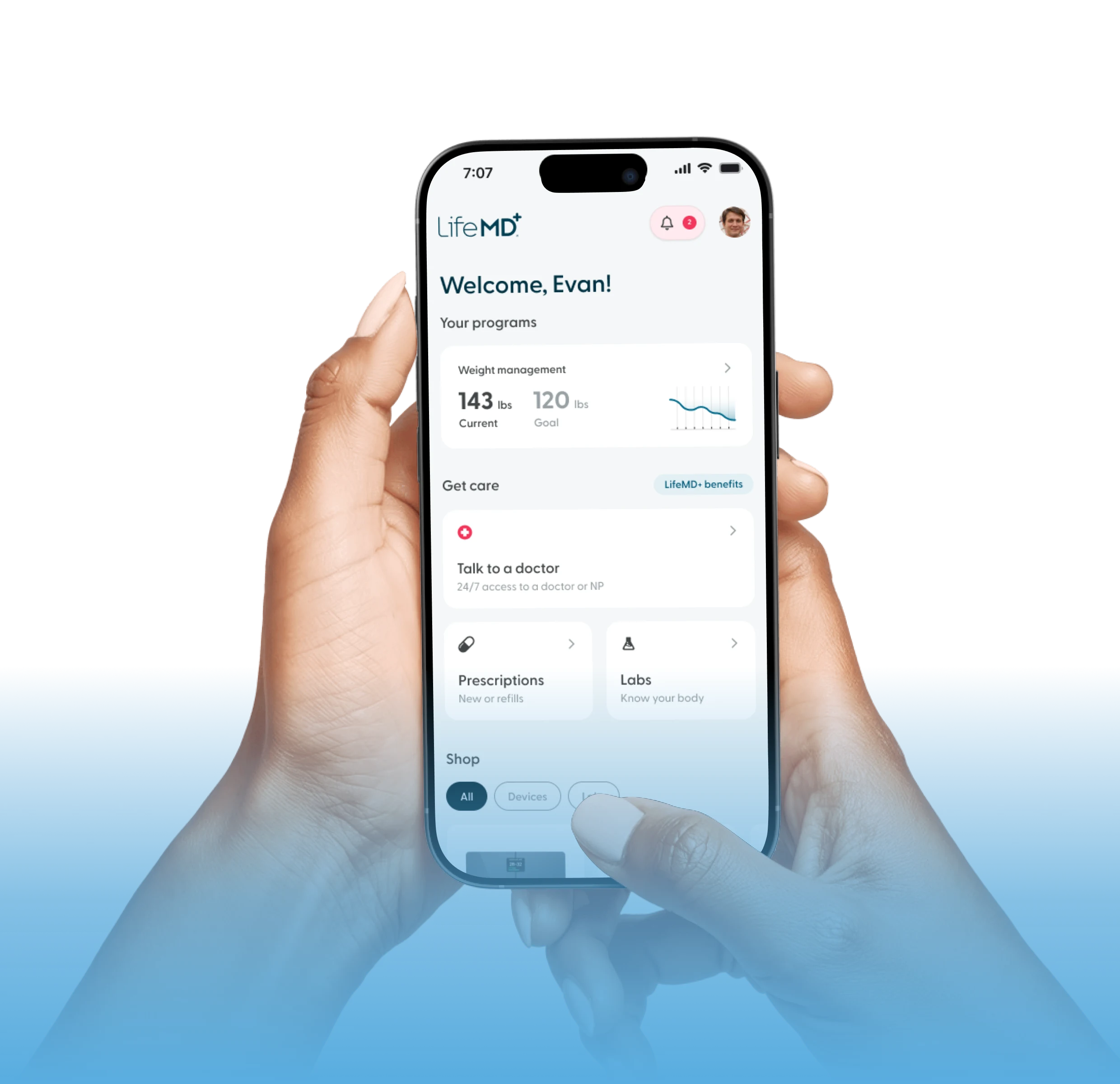
LifeMD offers at-home lab testing kits that allow you to collect a sample at home and mail it directly to a certified lab. At-home kits are available for purchase by all LifeMD+ members, and LifeMD+ membership is included with every LifeMD program.
If you're ready to take a more informed, proactive approach to your health, LifeMD makes it straightforward.
With LifeMD, you can connect with a licensed healthcare provider from the comfort of your home within an hour. If appropriate, your provider may prescribe a medication and send it directly to your local pharmacy. A LifeMD+ membership gives you 24/7 access to care, same-day prescription refills, exclusive wellness perks, and easy access to lab testing – all designed to make managing your health simple and stress-free.
Skip the waiting room. Join LifeMD and take control of your health today.