
How to Keep Your Healthcare With You When You Travel

You're three days into a trip when you feel the burn of a UTI, a sinus infection that turned your morning into misery, or the sudden realization that your maintenance medication has one pill left. You're hundreds of miles from your usual pharmacy and your regular doctor.
This is one of the most practical uses of telehealth, and also one of the most misunderstood. There's a rule about seeing a doctor across state lines that surprises almost everyone, and understanding it is the difference between smooth care on the road and an unexpected dead end. Here's how to travel without leaving your healthcare behind.
Your Care Follows You, Not Your Address
When you have a telehealth visit, the law generally treats the appointment as happening wherever you physically are at that moment, not where you live. The practice of medicine is considered to occur at the patient's location, so a provider needs to be licensed in the state you're standing in when you log on.
Simply speaking, if you live in Texas but you're on vacation in Colorado, a virtual visit for a new problem generally needs to be handled by a provider licensed in Colorado. Your home-state provider can't always treat a brand-new issue simply because you happen to be traveling.
This is exactly why the reach of a telehealth service matters so much for travelers. A provider network licensed in only a handful of states leaves you stranded the moment you cross the wrong border.
Key Point: Can I See My Telehealth Provider While Traveling Internationally?
U.S. telehealth providers are licensed by state, and that authority generally doesn't extend beyond the country's borders. Most services, including LifeMD, are set up to treat you when you're physically located within the United States, so once you land abroad, a virtual visit typically isn't an option, even with a provider you already see at home.
Before an international trip, it's worth handling anything you can in advance, like refilling prescriptions that will run low while you're away, so you're not scrambling for care once you're abroad.
Once you're back in the U.S., your telehealth care picks up right where it left off.
What Telehealth Can Handle While You're Away
For the common, non-emergency issues that tend to derail a trip, virtual care is often the fastest and simplest path back to enjoying yourself. Telehealth is well suited to problems that can be assessed through conversation and visible symptoms, such as:
Sinus infections, colds, and seasonal allergy flares
Minor skin irritations, rashes, and bites
Pink eye and other minor infections
Medication refills and follow-up for stable chronic conditions
For these, you can typically be seen from wherever you are and have a prescription sent to a nearby pharmacy the same day, no rental-car trip to an unfamiliar clinic required.
How to Keep Your Prescriptions From Running Out Mid-Trip
Prescription continuity is where a little planning pays off enormously.
Before you leave, check every prescription's remaining supply against your trip length, and refill anything that will run low while you're away. If you manage a chronic condition, this five-minute check is the single most valuable thing you can do.
If you run short on the road, a telehealth provider licensed in your current state can often help. Because e-prescribing is electronic, a prescription can typically be routed to a pharmacy near wherever you are, rather than your usual one back home. Rules are stricter for certain controlled medications, so those are worth sorting out before you travel rather than mid-trip.
When Virtual Care Isn't Enough
Telehealth is a powerful tool, not a universal one. Some situations call for in-person care immediately, and knowing the line keeps you safe.
Chest pain, difficulty breathing, signs of stroke, severe injuries, high fevers that won't break, or any symptom that feels alarming are reasons to go straight to an emergency room or call local emergency services, not to open an app. Good telehealth providers build this into how they operate: professional telemedicine standards call for clinicians to have a plan to refer patients to local in-person care when a condition requires it. A virtual visit can also be a smart first step to figure out whether an in-person trip is even necessary, and it can spare you a wait in an unfamiliar urgent care for something minor.
Why it Helps to Already Have a Provider
There's a real difference between starting fresh with a stranger mid-crisis and reaching a service that already knows you.
Regulators recognize this too. A new diagnosis generally requires a provider licensed where you're located, but national guidance carves out room for established patients to receive episodic and follow-up care, including after travel, from a provider they already have a relationship with. Setting up care before a trip, rather than during one, means your history, your medications, and your context are already in the system when you need them.
Many states also participate in the Interstate Medical Licensure Compact, a program that streamlines the process for physicians to be licensed in multiple states and makes broad, multi-state telehealth coverage far more feasible.
Your Pre-Trip Checklist
Refill any prescription that will run low while you're away
Save your telehealth login and know how to start a visit
Keep a current list of your medications and allergies accessible
Know the difference between a telehealth-appropriate issue and an emergency
Confirm your telehealth service covers the states you'll be visiting
Travel should be about where you're going, not anxiety over what happens if you get sick along the way. With a little preparation and an understanding of how cross-state care actually works, you can keep quality healthcare within reach from almost anywhere.
How LifeMD Can Help
If you'd rather not scramble for care the next time you're away from home, LifeMD can help you get ahead of it. Its affiliated medical group is licensed across all 50 states, so wherever you travel within the country, you're far more likely to reach a provider who's legally able to treat you where you are.
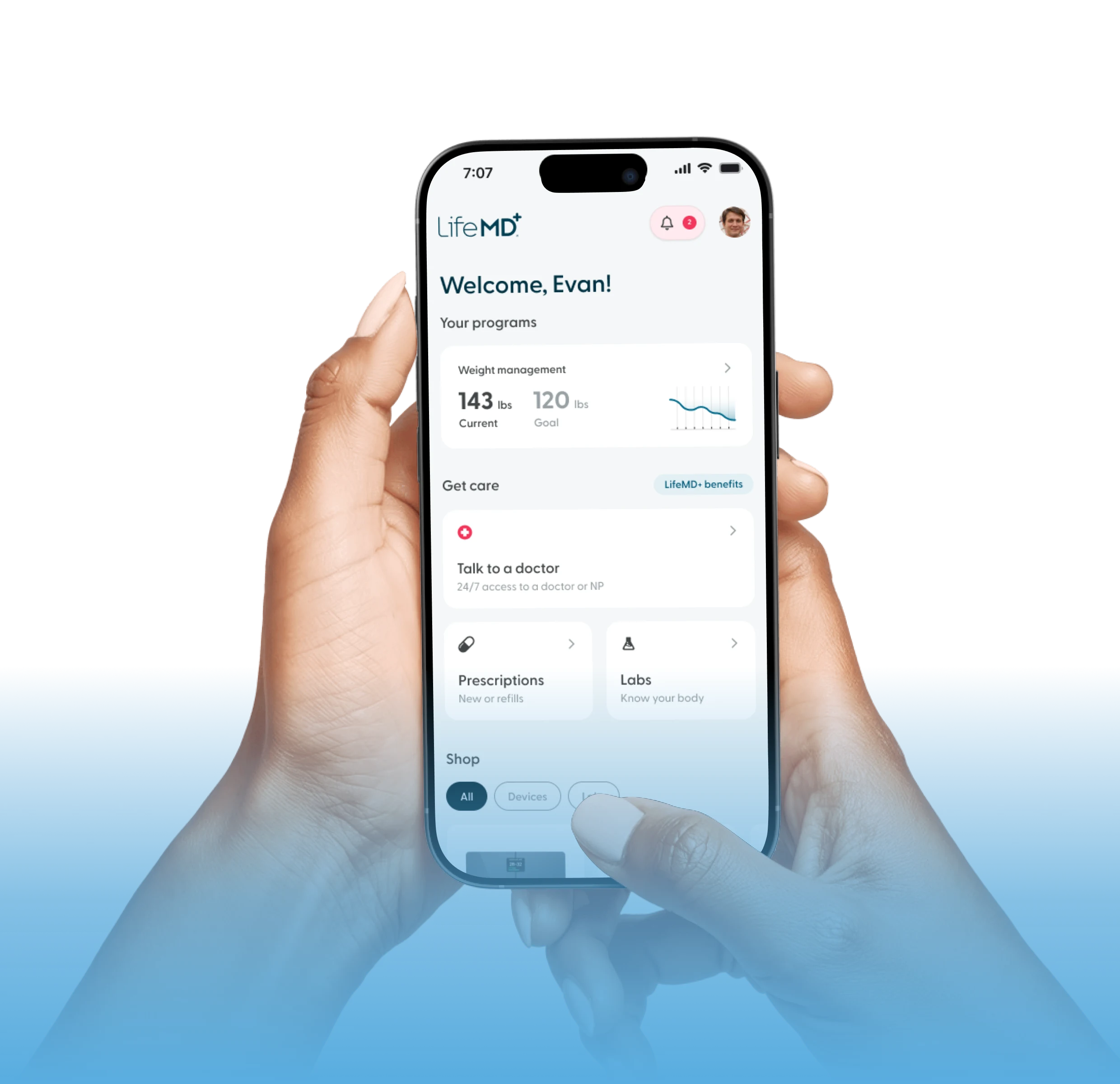
A LifeMD+ membership gives you access to both urgent and primary care within the hour, 24/7, whether you're dealing with a UTI two states over or just need a refill before your supply runs out. You connect with a licensed provider right from your phone, get treated, and have any prescriptions sent to a pharmacy near you, no unfamiliar clinic required.
Join LifeMD+ and keep quality care within reach wherever you go.