
How to Switch Providers Without a Gap in Your GLP-1 Treatment
People change healthcare providers for all kinds of ordinary reasons including cost, differences in communication, and insurance changes. When it comes to GLP-1 medications, gastrointestinal side effects, the nausea and digestive discomfort that can come with these medications, are the single most reason people stop GLP-1 treatment. In a 2025 analysis of nearly 79,000 patients, about 28% of people who discontinued treatment cited gastrointestinal side effects as the reason. Hands-on help managing those side effects is often what keeps someone on treatment, which is exactly why continuity of care matters when you switch.
Whatever the reason, the goal when you switch is the same: keep your treatment continuous. A GLP-1 medication works best when it’s taken consistently and dosed correctly, so the thing to protect during a transition is continuity of care. This guide walks through how to move from one provider to another without resetting your progress or running out of medication.
Get prescription weight loss medication online.
Find out if you're eligible for GLP-1s, and get started on your weight loss journey for as low as $75/month.


What Can Go Wrong When Switching Providers While Taking a GLP-1 Medication?
When a switch between providers isn't well planned, a couple of things can come up.
The first is having to restart your dose. GLP-1 medications are started at a low dose and increased gradually over weeks or months. This slow ramp-up helps your body adjust and reduces nausea and digestive issues. If your new provider doesn't have records showing what dose you're currently taking and tolerating, they may need to start you over at the lowest dose to be safe. That means you may go through that initial adjustment period all over again.
The second is a gap in your medication. Days or weeks can pass between leaving one provider and starting with another while your prescriptions, records, and insurance approvals get sorted out. That break in treatment can throw off your progress and make it harder to stay on track.
Both situations are preventable. It really just comes down to making sure your information gets to your new provider before you do.
How Can I Make Sure Switching Providers Goes Smoothly?
To pick up where you left off rather than restart, a new provider generally needs a clear record of your treatment so far. Before your first appointment, gather:
The specific medication and current dose you are on, and the date you started it.
Your titration history: the doses you have moved through, and how you tolerated each step.
Recent lab work, ideally from the past 12 months, so the new provider has your baseline and doesn’t necessarily need to reorder everything.
A summary of any side effects you have had and how they were managed.
Your relevant medical history, and anything else that affects eligibility.
You can usually request these records directly from your current provider or through the pharmacy that has been filling your prescription. Whether the new provider continues you at your exact current dose is a clinical judgment they make based on this information and their own evaluation, but having the documentation in hand is what makes it possible to continue without a restart in the first place. Without it, caution wins and titration often starts over.
A reputable online program will typically have you complete an intake questionnaire and a provider review before treatment, so sharing your history up front fits naturally into that process.
How Do I Prevent a Medication Gap During a Provider Switch?
Timing is everything when it comes to preventing a medication gap when switching providers. Here are some tips to keep in mind:
Start the switch before you run low, not after. Give yourself a cushion of at least a couple of weeks of medication on hand when you begin the transition, so there’s room for records to transfer and a new prescription to be issued.
Have your new provider’s intake completed and reviewed while you still have medication left. That way, if you’re approved to continue, the new prescription can be sent to your pharmacy without a break.
Confirm where your prescription will be filled. If it is going to a new pharmacy or being shipped, ask about processing and delivery time so you are not caught waiting.
How Do I Transfer My Insurance and Prior Authorization to a New Provider?
Insurance is often the least visible part of a switch and the part most likely to cause delays. GLP-1 coverage typically requires a prior authorization, which is documentation your provider submits to your insurer justifying the medication. When you move providers, that approval doesn’t automatically follow you.
Be sure to ask your current provider or program for a copy of any prior authorization already on file, including the clinical notes that supported it, since a new provider can often use that history to move faster. Ask your new program whether they handle benefit verification and prior authorization on your behalf; many do. LifeMD, for example, offers a benefit check that works with your insurer to determine coverage for GLP-1 medications, which can take some of the paperwork burden off you during a transition.
If your coverage or plan is changing at the same time you switch providers, flag that early. A coverage change and a provider change happening together is the most common cause of an unexpected gap.
What Should I Ask a New Provider Before Making the Switch?
Before you finalize a new provider, a short set of questions will help tell you whether the switch will be smooth:
Will you continue me at my current dose if my records support it, or do you restart everyone at the lowest dose?
Do you handle insurance verification and prior authorization, or is that on me?
How quickly can a prescription be issued after my intake is reviewed?
What ongoing support do you offer for managing side effects?
That last question matters more than it looks. Since side effect management is one of the main reasons people leave programs in the first place, choosing a new provider that offers real, ongoing clinical support is often the difference between a switch that sticks and one that sends you looking again.
How Can LifeMD Help?
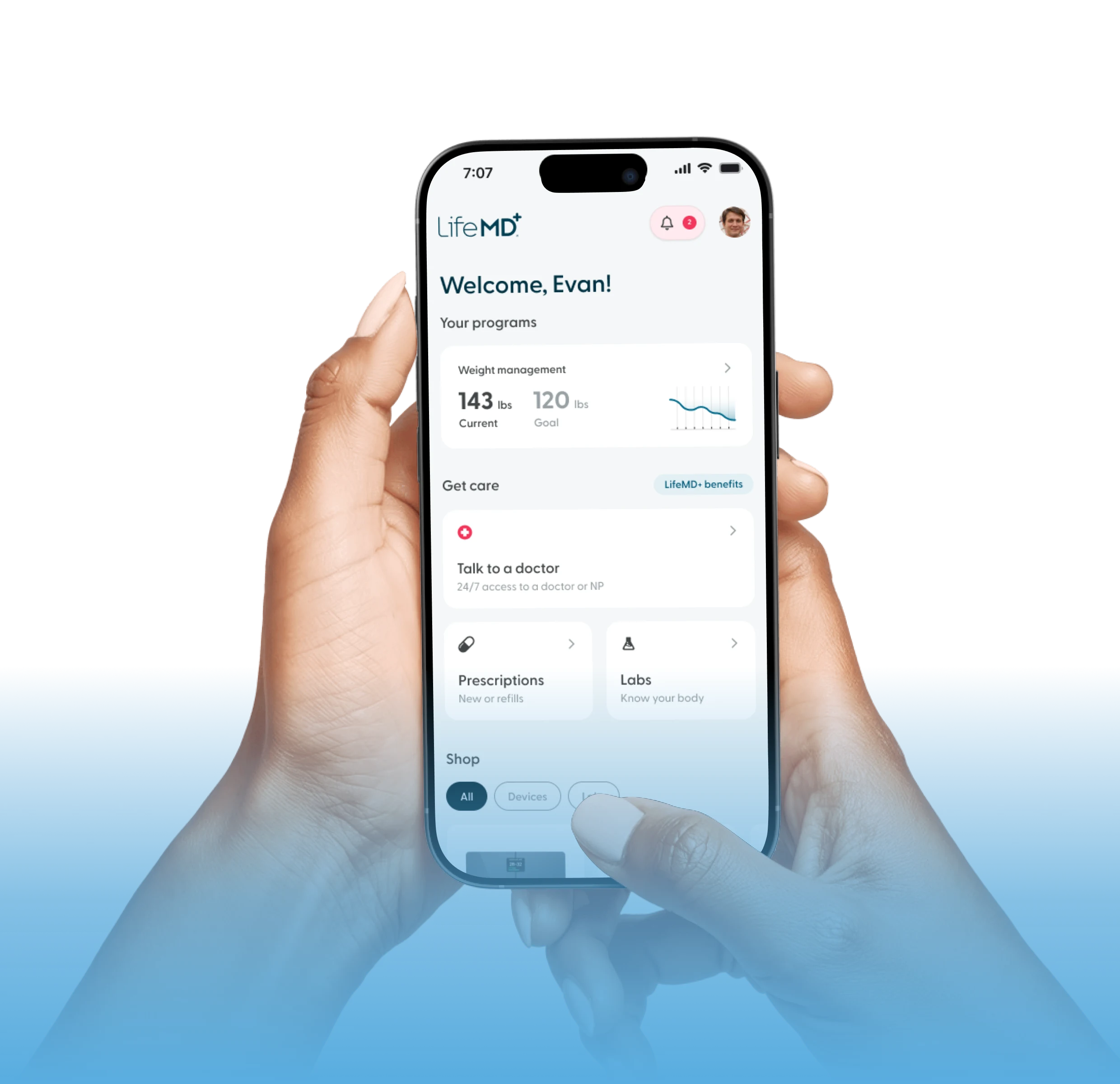
LifeMD has an online Weight Management Program that is built for continuity. When you switch to us, your provider reviews your complete treatment history and works to continue your treatment at your current dose, handles your insurance and prior authorizations, and keeps your medication flowing. That approach reduces the risk of restarts and gaps.
Take the free assessment to see if you qualify and continue your treatment smoothly.