
What is Retatrutide? How Can You Get it?
Retatrutide is an investigational injectable medication you take once a week. Eli Lilly developed it as a potential treatment for weight management. Most weight loss medications work by sending signals to three systems in your body that control hunger, energy, and how you burn fat. Retatrutide sends signals to all three of these systems (GLP, GIP, and glucagon) at the same time, while current medications like Wegovy® and Zepbound® only activate one or two.
When all three systems get activated together, your appetite drops, your body burns more energy, and you feel fuller longer. That's why health researchers think retatrutide could work more powerfully than the medications available right now.
Current Status of Retatrutide (as of September 2026)
Not FDA-approved. Retatrutide is investigational and cannot be prescribed for weight loss. It’s available only through clinical trials and a narrow early-access pathway. Eli Lilly plans to file for FDA approval in early 2027.
What’s the Timeline for FDA-Approval?
Retatrutide is currently in the final stage of testing. Here's where things stand and what comes next:
What's already happened
May 21, 2026: First trial results positive (adults without diabetes)
July 23, 2026: Two more trials succeeded (adults with type 2 diabetes, and people with severe obesity plus heart disease)
August 3, 2026: Limited early-access program opened for people with severe obesity who can't join a trial
What's coming
Early 2027: Eli Lilly plans to submit retatrutide to the FDA
After submission: The FDA reviews the application. This process takes time, and approval is never guaranteed. No approval date has been announced.
Even if everything goes smoothly, retatrutide won't be available by prescription in 2027. FDA review can take months or longer after a company files. Right now, your only options are enrolling in a clinical trial or applying for the limited early-access program (both require your provider to submit the request).
How does Retatrutide Compare to Wegovy® and Zepbound®?
The weight loss numbers below come from different clinical trials with different groups of people, different doses, and different treatment lengths, so these aren't a head-to-head comparison. But they give you a realistic picture of how these medications perform.
Medication | Approval Status | How it Works | Average Weight Loss (highest dose) | Source trial |
Retatrutide | Investigational (not FDA-approved) | Triple (GIP / GLP-1 / glucagon) | Up to 20.8% (~49.6 lb) and 22.6% (~55.8 lb) at 80 weeks | TRIUMPH-2 (T2D) & TRIUMPH-3 (severe obesity + CVD) |
Zepbound (tirzepatide) | FDA-approved | Dual (GIP / GLP-1) | ~20.9% (~48 lb) at 72 weeks (15 mg) | SURMOUNT-1 |
Wegovy (semaglutide) | FDA-approved | Single (GLP-1) | ~15% at 68 weeks (2.4 mg) | STEP 1 |
What this means: Retatrutide's numbers look slightly higher than Zepbound® and notably higher than Wegovy®, but it's still being tested. The trials used different patient groups and different doses, so a direct comparison isn't straightforward. What matters is that all three show real, meaningful weight loss.
What are the Side Effects of Retatrutide?
Because retatrutide is still being studied, doctors are still learning about its full safety profile. So far, the side effects reported in trials have mostly been gastrointestinal – the same kinds you see with other GLP-1 medications like Wegovy® and Zepbound®. These included nausea, diarrhea, constipation, and vomiting. Most people experienced them as mild to moderate, and they were most common when the dose was being increased.
Some people also reported a tingling sensation in the skin. As with any investigational medication, the long-term safety picture will continue to emerge as more data comes in.
Here's how side effects compared to placebo in the Phase 3 TRIUMPH-1 trial at the highest dose
Side effect | Retatrutide (highest dose) | Placebo |
Nausea | 42.4% | 14.8% |
Diarrhea | 32.0% | 13.5% |
Constipation | 26.1% | 10.9% |
Vomiting | 25.3% | 4.8% |
Trials have also noted a skin-tingling sensation (dysesthesia) that appears more specific to retatrutide than to current GLP-1 drugs. As with any investigational medicine, side effects and long-term risks are not yet fully characterized.
Can You Get Retatrutide Right Now?
Retatrutide is not FDA-approved, so a provider cannot prescribe it for weight loss. It's not available at a pharmacy, and it's not something you can purchase legally online. Right now, there are only two ways to access it, and both have pretty strict limitations.
Clinical trials: Eli Lilly is still running studies to test retatrutide’s safety and effectiveness. If you want to participate, you have to meet specific criteria depending on which trial you’re interested in. Most people won’t qualify because trials are designed to study a particular group of people under controlled conditions.
Early access program: In August 2026, Lilly opened a narrow pathway for people with severe obesity who have tried other treatments without success and who have at least two serious health conditions related to their weight (like heart disease or diabetes). If you think you qualify, your doctor has to submit a request to Lilly and get approval from the FDA and a review board. This process takes time, and spots are limited.
A safety note: Because retatrutide isn't approved yet, the only safe way to access it is through one of these two legitimate channels. Anything being sold as retatrutide online or outside of a trial or authorized program hasn't been reviewed by the FDA and could be dangerous – whether it's counterfeit, contaminated, or something else entirely.
If You’re Weighing Your Options Now
Retatrutide is not the only route to medically supervised weight care. FDA-approved GLP-1 medications such as Wegovy® and Zepbound® are already available through licensed providers who assess eligibility, order baseline labs, and monitor treatment over time, including through the LifeMD Weight Management Program.
How Can I Access GLP-1 Medications Online?
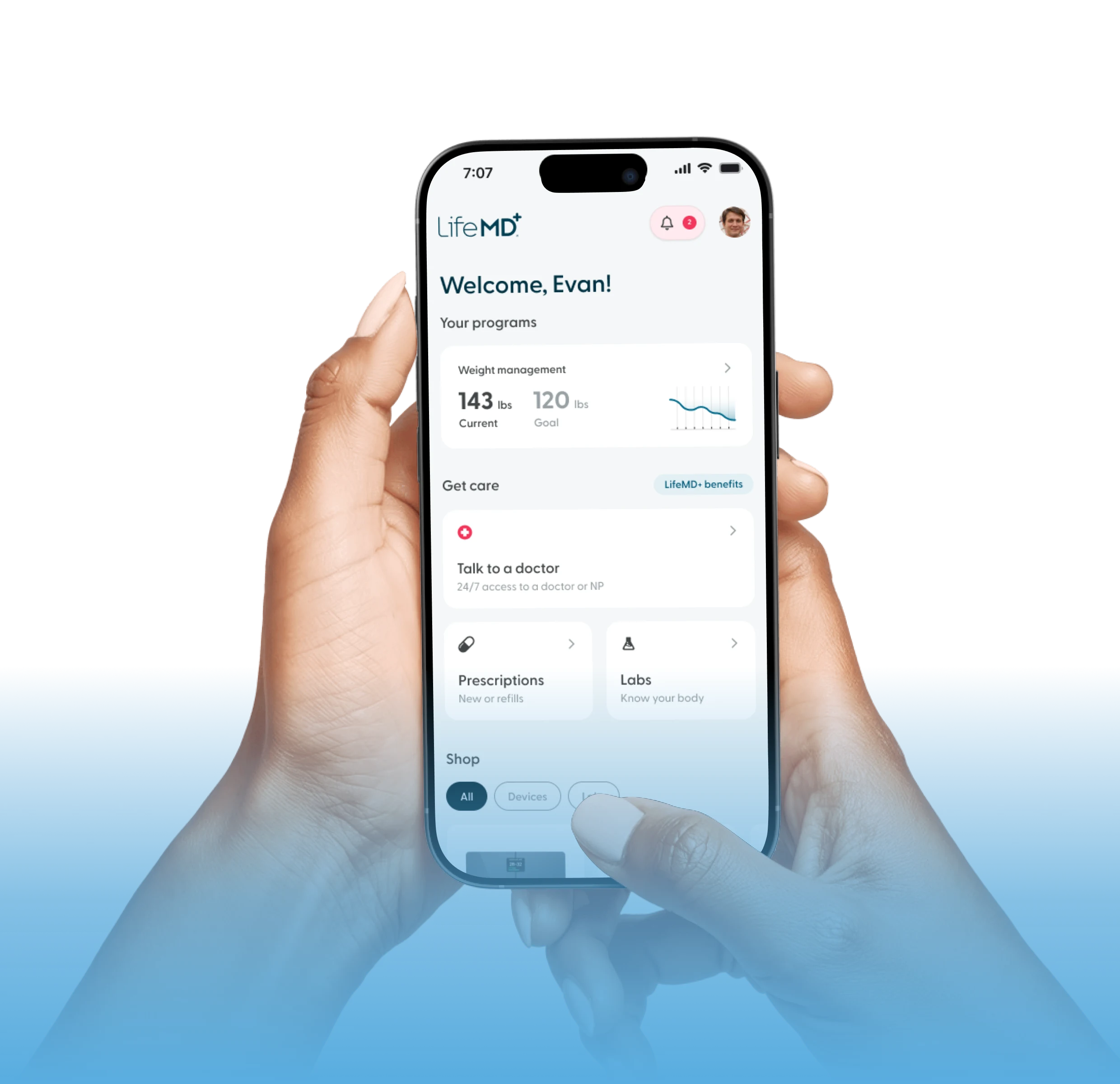
Retatrutide isn't available yet, but you don't have to wait to access medically supervised weight loss. FDA-approved GLP-1 medications like Wegovy® and Zepbound® are available today through the LifeMD Weight Management Program. Your provider will confirm you're a good candidate, order baseline lab work, screen for any conditions that would make a GLP-1 unsafe, and create a personalized treatment plan – all from the comfort of your home.
Take the free assessment to see if you qualify.