
Best Prescription Appetite Suppressants in 2026

Over-the-counter appetite suppressants are easy to find — but as anyone who has tried them knows, easy to find doesn't always mean effective. For people who haven't been able to make meaningful progress with diet, exercise, and supplements alone, prescription weight loss medications offer something fundamentally different: clinically proven efficacy, medical oversight, and treatments that work with your biology rather than around it.
The prescription weight loss landscape has also changed significantly in recent years. Alongside older, stimulant-based medications that have been around for decades, a new class of treatments — GLP-1 receptor agonists — has transformed what's possible for people managing obesity and overweight. Understanding all of your options is the first step toward finding the right one.
This guide covers the most widely prescribed appetite suppressants and weight loss medications available today, how they work, and what to consider when talking to a provider about which path makes sense for you.

Foundayo® (orforglipron)

Wegovy® Pill (semaglutide)
Zepbound® (tirzepatide)
Wegovy® (semaglutide)

Saxenda® (liraglutide)
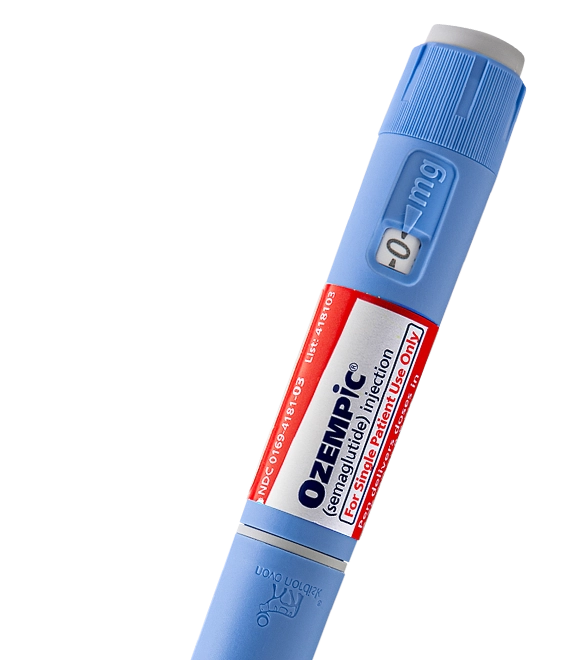
Ozempic® (semaglutide)
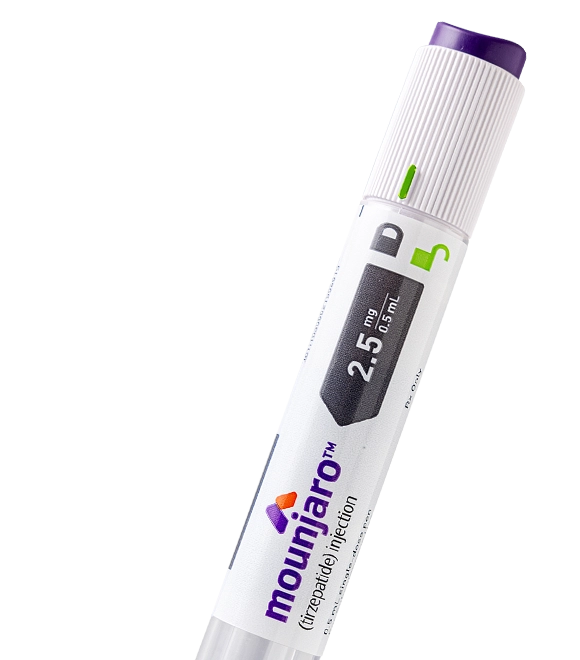
Mounjaro® (tirzepatide)
How Prescription Appetite Suppressants Differ from OTC
The most important distinction between prescription and over-the-counter weight loss options isn't price or accessibility — it's regulatory standing. Unlike dietary supplements, which can be sold without proof of efficacy, prescription medications are required to demonstrate safety and effectiveness in clinical trials before the FDA will approve them.
Prescription appetite suppressants also tend to work more directly on the underlying drivers of hunger and weight. Rather than adding bulk to your stomach or delivering a caffeine boost, they interact with the hormonal and neurological systems that regulate appetite, metabolism, and how your body stores and uses energy. For people whose weight is driven by biology — as it is for most people with obesity — that distinction matters.
It's also worth noting that prescription treatment requires a licensed healthcare provider. That's not a barrier so much as a safeguard — a provider can evaluate your full health picture, screen for contraindications, and recommend the option most likely to be both safe and effective for you specifically.
Traditional Prescription Appetite Suppressants
Before GLP-1 medications reshaped the weight loss landscape, a handful of older prescription options dominated the conversation. These medications are still widely prescribed today — and for some patients, they remain a reasonable option. Here's what you need to know about each one.
Phentermine
Phentermine is one of the oldest and most prescribed weight loss medications in the U.S., and in many ways it set the template for prescription appetite suppression. It works by stimulating the central nervous system to reduce hunger signals, similar in mechanism to an amphetamine — though significantly milder. It's effective at reducing appetite in the short term, and for some patients produces meaningful early weight loss.
The limitations are real, though. Phentermine is a controlled substance and is approved only for short-term use — typically up to 12 weeks — because tolerance builds relatively quickly and the appetite-suppressing effects diminish over time. It's also not appropriate for everyone. People with a history of cardiovascular disease, high blood pressure, hyperthyroidism, or anxiety disorders are generally not candidates. Common side effects include elevated heart rate, insomnia, dry mouth, and jitteriness.
For patients who need a short-term jumpstart and don't have contraindications, phentermine can be a useful tool. But it's not a long-term solution on its own.
Qsymia (phentermine/topiramate)
Qsymia combines phentermine with topiramate — an anticonvulsant that also has appetite-suppressing effects — into a single extended-release medication. The combination is more effective than either drug alone, and unlike phentermine on its own, Qsymia is approved for long-term use. Clinical trials have shown average weight loss of around 7-9% of body weight over a year, making it one of the more effective traditional options available.
The side effect profile is more complex than phentermine alone, however. Topiramate can cause cognitive effects — difficulty with memory and concentration are commonly reported — as well as mood changes, tingling in the extremities, and increased heart rate. Qsymia also carries a significant contraindication for pregnancy due to the risk of birth defects, and requires a Risk Evaluation and Mitigation Strategy (REMS) program for prescribing. It's not appropriate for patients with glaucoma, hyperthyroidism, or those taking MAOIs.
Contrave (naltrexone/bupropion)
Contrave takes a different approach than stimulant-based options. Rather than directly suppressing appetite through the nervous system, it works on the brain's reward pathways — targeting the areas that drive cravings and emotional eating. Naltrexone is typically used to treat addiction, while bupropion is an antidepressant; together, they reduce the rewarding feeling associated with food in a way that can make it easier to eat less without feeling deprived.
Clinical trials have shown average weight loss of around 5-8% of body weight over a year — modest, but meaningful for some patients. Side effects include nausea, constipation, headache, insomnia, and elevated blood pressure. Contrave is not appropriate for patients with a history of seizures, eating disorders, or those taking opioids or MAOIs — the naltrexone component can precipitate withdrawal in patients dependent on opioids. As with all bupropion-containing medications, it carries a warning for increased risk of suicidal thoughts, particularly in younger patients.
Saxenda (liraglutide)
Saxenda occupies an interesting position in the prescription weight loss space. It's a GLP-1 receptor agonist, but it predates the more common GLP-1s and works somewhat differently. It's a once-daily injectable that mimics the GLP-1 hormone to reduce appetite and slow gastric emptying. For several years, it was the most effective prescription weight loss option available.
By today's standards, its efficacy is modest compared to newer GLP-1s — clinical trials showed average weight loss of around 5-10% of body weight after 56 weeks. It also requires a daily injection rather than weekly, which many patients find less convenient. Side effects are consistent with the GLP-1 class: nausea, vomiting, diarrhea, and constipation are most common, particularly early in treatment. It carries the same boxed warning for thyroid C-cell tumors seen across the GLP-1 class.
Saxenda is still prescribed today, but for most patients it has largely been superseded by the newer, more effective GLP-1 options now available.
The arrival of GLP-1 receptor agonists has fundamentally changed what's possible in prescription weight loss treatment. These medications don't just suppress appetite in the traditional sense — they work directly on the hormonal pathways that regulate hunger, fullness, and metabolism, producing levels of weight loss that were previously only achievable through bariatric surgery. For people who have struggled with obesity for years despite diet, exercise, and other interventions, they represent a genuine shift in what treatment can look like.
Here's a breakdown of the three major GLP-1 options currently approved for weight management.
Why GLP-1 Medications Have Changed Weight Loss Treatment
GLP-1 medications are often categorized as appetite suppressants — and while that's technically accurate, it undersells what they actually do. Unlike traditional options that simply blunt hunger signals, GLP-1s work on the hormonal pathways that regulate appetite, metabolism, blood sugar, and even cardiovascular health. The result isn't just eating less — it's a fundamental shift in how your body manages weight.
Wegovy (semaglutide)
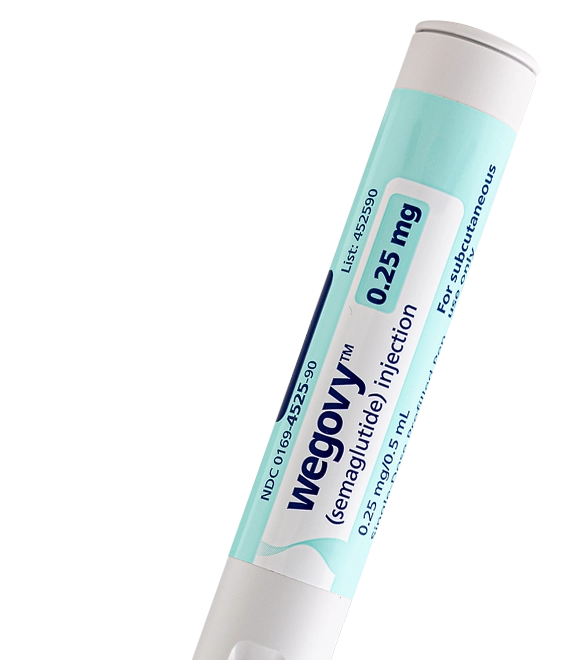
Wegovy is an injectable semaglutide medication administered once weekly, and it was the drug that put GLP-1 weight loss treatment on the map. In clinical trials, patients on the highest dose lost an average of around 15% of their body weight over 68 weeks — a result that at the time of its approval in 2021, was unlike anything seen in prescription weight loss before.
Beyond weight loss, Wegovy has demonstrated significant cardiovascular benefits. A landmark trial published in 2023 found that semaglutide reduced the risk of major cardiovascular events — heart attack, stroke, and cardiovascular death — by 20% in people with obesity and established cardiovascular disease. That finding elevated GLP-1 treatment from a weight loss intervention to a broader cardiometabolic therapy.
In December 2025, the FDA also approved an oral version of Wegovy — a once-daily pill that must be taken on an empty stomach in the morning, with a waiting period before eating or drinking. For patients who prefer to avoid injections, it offers the same clinical profile in a different format, though the food and timing requirements are a consideration for some.
Get prescription weight loss medication — no injection required.
Find out if you're eligible for the Wegovy® pill, and get started on your weight loss journey. Program starting at $75/month .
Side effects are consistent with the GLP-1 class: nausea, vomiting, diarrhea, and constipation are most common and tend to improve over time. It carries a boxed warning for thyroid C-cell tumors and is not appropriate for patients with a personal or family history of medullary thyroid carcinoma or MEN2.
Zepbound (tirzepatide)
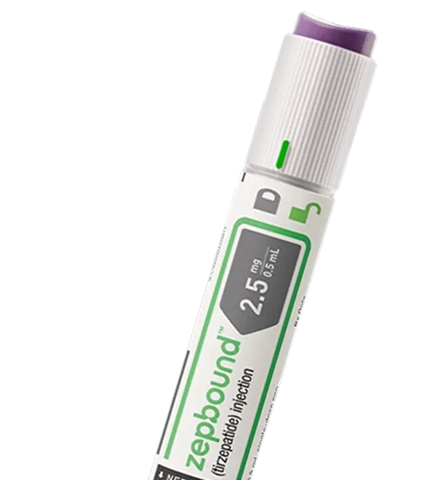
Zepbound is currently the most effective FDA-approved medication for weight loss. Unlike semaglutide, which targets only the GLP-1 receptor, tirzepatide is a dual agonist. This means that it activates both GLP-1 and GIP receptors simultaneously. GIP is another gut hormone involved in metabolism and fat storage, and targeting both pathways together produces significantly greater weight loss than GLP-1 alone.
In the SURMOUNT-1 clinical trial, patients on the highest dose of tirzepatide lost an average of 22.5% of their body weight over 72 weeks — the highest average weight loss ever recorded in a Phase 3 obesity trial. At that level, results begin to approach what's typically seen with bariatric surgery.
Zepbound is administered as a once-weekly injection and is approved for adults with obesity or overweight with at least one weight-related condition. Like Wegovy, it has demonstrated cardiometabolic benefits beyond weight loss, including improvements in blood pressure, cholesterol, and blood sugar. It's also approved for obstructive sleep apnea in adults with obesity — the first medication ever approved for that indication.
Side effects mirror the broader GLP-1 class, with GI symptoms most common early in treatment. It carries the same boxed warning for thyroid C-cell tumors.
Foundayo (orforglipron)
Foundayo is the newest addition to the GLP-1 class and the most accessible in terms of both format and price. Approved by the FDA on April 1, 2026, it's a once-daily oral GLP-1 receptor agonist — a small molecule pill that can be taken any time of day, with or without food. For patients who want the clinical benefits of a GLP-1 without a weekly injection or complicated dosing requirements, it's a meaningful option.
In the clinical trial, patients on the highest dose lost about 25 lbs — or approximately 11% of their body weight — over 72 weeks. While that's more modest than Zepbound's results, it's still a clinically significant outcome, and the convenience and accessibility advantages are real. At $149-$349 per month for self-pay patients, it also carries a lower price point than the injectable options, with insured patients potentially paying as little as $25 per month.
Foundayo is being studied for additional indications including type 2 diabetes, obstructive sleep apnea, and hypertension, suggesting its clinical profile may broaden further in the coming years.
Get prescription weight loss medication — no injection required.
Find out if you're eligible for Foundayo®, and get started on your weight loss journey. Program starting at $75/month .
Key Point: How Do These GLP-1 Options Compare?
The right GLP-1 medication depends on your health history, weight loss goals, lifestyle, and insurance coverage – and that looks different for everyone.
A licensed provider can help you evaluate which option fits your specific situation — which is exactly the conversation worth having before starting any of these medications.
How to Get Prescription Weight Loss Medication Through LifeMD
If you're ready to explore prescription weight loss treatment, the next step is talking to a licensed provider who can evaluate your options and put together a plan that works for you. That's exactly what the LifeMD Weight Management Program is designed to do.
Through LifeMD, you have access to licensed healthcare providers who specialize in weight management and can prescribe GLP-1 medications — including Zepbound, Wegovy, and Foundayo — based on your individual health profile. Clinical oversight doesn't stop at the prescription. Your provider will monitor your progress, adjust your treatment as needed, and support you through the process from start to finish.
LifeMD also will work as your insurance concierge, verifying your coverage, submitting prior authorizations, and providing cost estimates so you have a clear picture of what treatment will look like before you commit.
Make an appointment today to see if you qualify.